Shrimp of the Woods Identification Chart With Pictures
— views
Shrimp of the woods is a common name for Entoloma abortivum, a fungus best known for the white, lumpy "aborted" form it makes near rotting hardwood in late summer and fall. Current research indicates that these lumps are honey mushrooms deformed by the Entoloma, not failed Entolomas. White lumps on the forest floor can also be puffballs, earthballs or deadly Amanita eggs, so every lump must be cut in half and checked by an expert.
This shrimp of the woods identification chart with pictures covers both forms of the fungus, its relationship with honey mushrooms, a full cut-it-open test, the look-alikes that matter and what the poisoning records say. It is an identification guide, not permission to eat a wild mushroom.
Key Takeaways
- Shrimp of the woods are irregular white to brownish lumps about 1 to 4 inches high, often with honey mushrooms, and sometimes gray, pink-gilled Entolomas, nearby.
- Cut every lump top to bottom. Shrimp of the woods show white and pinkish areas inside, with no cap, gills or stem outline.
- An outline of a tiny mushroom inside means it may be a deadly Amanita egg. Marbled purple to black flesh means a poisonous earthball.
- A 2001 study and a 2021 gene study both support the view that Entoloma abortivum attacks honey mushrooms, not the reverse.
- The gilled form leaves a pink spore print and looks like several poisonous Entolomas, so sources advise against relying on it.
- The lumps contain honey mushroom tissue, and honey mushrooms upset some people's stomachs. Sources say to cook them very well.
Shrimp of the Woods Identification Chart
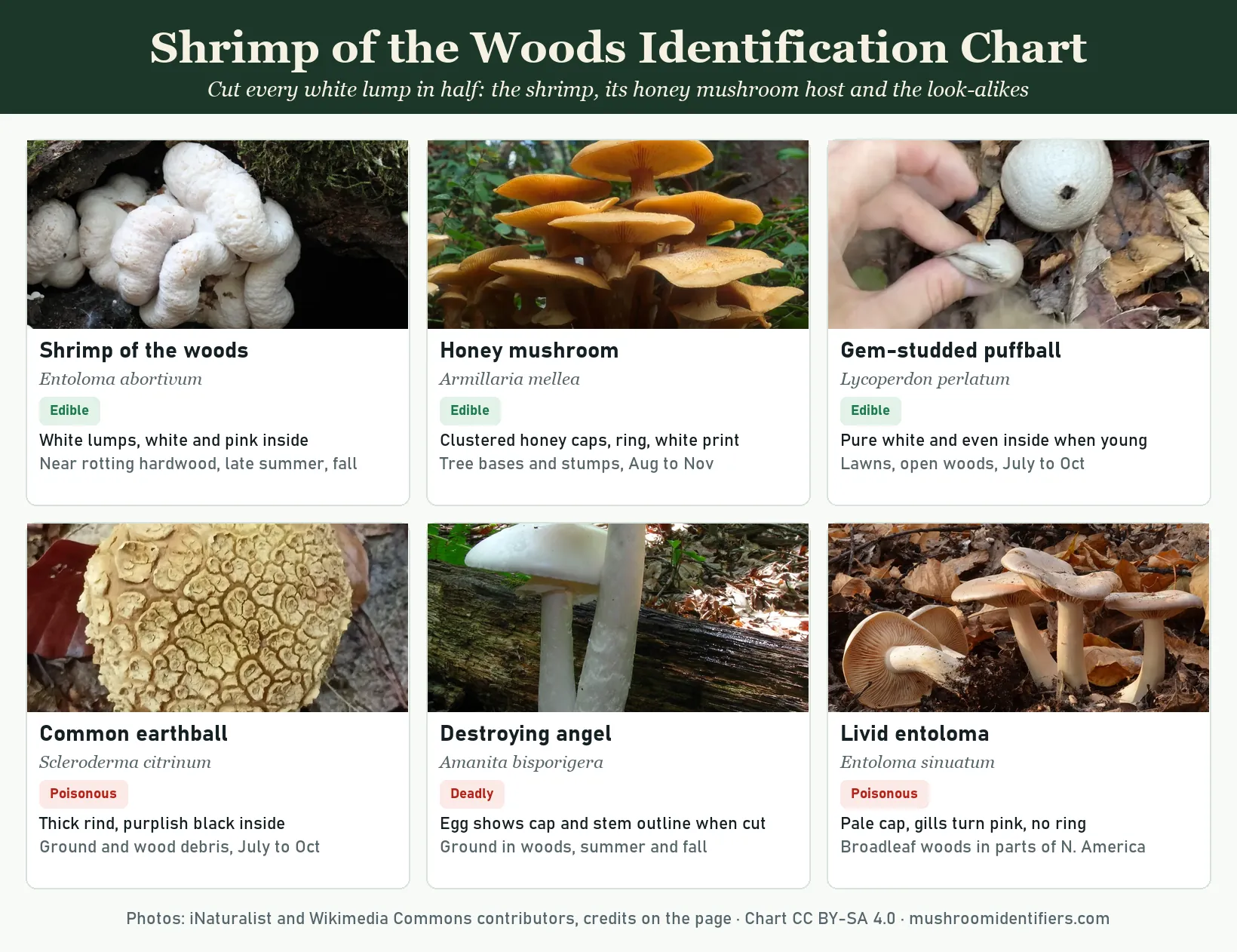
Match the outside first, then always cut the specimen in half and check the inside. Every mushroom in this chart can turn up on the same forest floor in late summer and fall. Each row gives the feature that separates it from shrimp of the woods.
| Mushroom | Key features | Where and when | Edibility or risk |
|---|---|---|---|
| Shrimp of the woods (Entoloma abortivum, aborted form) | Irregular white lumps, 2 to 10 cm, browning with age; white and pinkish inside | Near decaying hardwood, lawns and wood chips; late summer and fall; east of the Rockies | Called edible by sources; contains honey mushroom tissue; expert check needed |
| Aborting entoloma, gilled form (Entoloma abortivum) | Gray cap 2 to 8 cm; gray gills turning pink; pink spore print; mealy smell | Same places, sometimes next to the lumps | Avoid; similar Entolomas are poisonous |
| Honey mushroom (Armillaria mellea) | Honey-colored caps in clusters; ring on the stem; white spore print | Bases of trees and stumps; August to November in Missouri | Edible when cooked, but upsets some stomachs |
| Gem-studded puffball (Lycoperdon perlatum) | White ball with or without spiny warts; pure white and even inside when young | Lawns, open woods, soil or wood; July to October | Edible only when white throughout and confirmed |
| Common earthball (Scleroderma citrinum) | Thick, warty, yellowish brown rind; marbled, then purplish black inside | Ground and wood debris near trees; July to October | Poisonous |
| Destroying angel egg (Amanita bisporigera) | White egg; cut in half, shows the outline of a cap and stem | On the ground in woods; summer and fall | Deadly |
| Livid entoloma (Entoloma sinuatum) | Pale cap 6 to 15 cm; yellowish gills turning pink; no ring | Broadleaf woods in many parts of North America | Poisonous |
Details come from A Guide to Missouri's Edible and Poisonous Mushrooms and the other sources linked below. Compare your find with real photographs as well.
What Is Shrimp of the Woods?
Shrimp of the woods is a common name for the white lumps that form where Entoloma abortivum meets honey mushrooms. The same fungus also makes an ordinary gilled mushroom. Tom Volk of the University of Wisconsin-La Crosse describes the gilled form as a gray mushroom with a gray stem and pink gills, and the second form as a white "aborted" lump without proper gills.
The fungus has collected many names. Midwest American Mycological Information lists aborted entoloma, shrimp of the woods, hunter's heart and ground prune. Tom Volk's Fungus of the Month page adds that the lumps are sold in some Mexican markets as totlcoxcatl, which means "turkey wattle." The authors of the 2001 study recommended "abortive entoloma" as the common name, since in their view the Entoloma causes the aborting rather than being aborted.
Who Is Parasitizing Whom? Entoloma and Honey Mushrooms
Current research supports the view that Entoloma abortivum is the parasite and the honey mushroom (Armillaria) is the victim. After 1974, field guides said the opposite. The lumps were explained as Entolomas deformed by honey mushrooms. A 2001 study turned that explanation around, and a 2021 study supported the new view.
| Year | Who | What they reported |
|---|---|---|
| 1893 | Charles Peck | Reported aborted Armillaria specimens he could not tell from aborted Entolomas |
| Until 1974 | Field guides and mycologists | Lumps were thought to be Entolomas that never developed properly |
| 1974 | Watling | Found Armillaria cells in the lumps and concluded that Armillaria parasitized the Entoloma |
| 2001 | Lindner Czederpiltz, Volk and Burdsall | Showed the lumps are malformed Armillaria fruiting bodies permeated by Entoloma threads |
| 2021 | Koch and Herr | Found that gene activity in the lumps comes mainly from E. abortivum, which supports Entoloma as the parasite |
The 2001 paper in Mycologia came from the University of Wisconsin and the USDA Forest Service. Its authors noted that the lumps grow from black Armillaria cords and produce Armillaria-like spores. In lab dishes, adding E. abortivum stopped the normal development of Armillaria tabescens fruiting bodies. Tissue from southern Wisconsin lumps was identified as Armillaria gallica.
The 2021 study in mSystems used a specimen from East Lansing, Michigan, with Armillaria mellea as the host. The most strongly switched-on Entoloma genes in the lumps make enzymes that break down oxalic acid, which the authors suggest may help the Entoloma overcome its host. The authors list A. gallica, A. ostoyae and Desarmillaria tabescens among the hosts confirmed by earlier work. They note that the affected species seem to be only those in eastern North America and eastern Asia. Tom Volk's page adds a fair caution: the reverse relationship has not been completely ruled out.
How Do You Identify Shrimp of the Woods?
Shrimp of the woods are irregular white lumps, 2 to 10 cm high, that grow near rotting wood and are white with pinkish areas inside. Look for honey mushroom clusters, which often fruit nearby, and for gilled gray Entolomas. No single clue is enough, so check the outside, the inside, the base and the neighbors.
The Aborted Form
One species account describes an irregular glob of tissue 2 to 10 cm high, whitish and discoloring brownish. Midwest American Mycological Information adds that the lump often has a sunken cavity in the center. Some lumps are only partly aborted. Tom Volk shows specimens with deformed caps on normal-looking stems, and one cluster about 25 cm long.
The Gilled Form
The gilled form has a gray to grayish brown cap 2 to 8 cm across, with an inrolled edge when young. Its gills are pale gray at first and turn pink as spores mature. They are attached to the stem or run down it. The stem is 2 to 8 cm long, often with an enlarged base. A standard reference describes the odor and taste as strongly mealy.
Spore Print
The gilled form leaves a pink spore print, and its spores are angular, with 5 to 8 sides under a microscope. A pink print separates it from honey mushrooms, which print white. Learn the method in our guide to how to make a spore print.
The Base
Dig up the whole lump. The 2001 study found that the lumps usually, if not always, have black cords, called rhizomorphs, attached at the base. That is how honey mushrooms grow. In a cut section, the base shows a dark layer and the yellowish and pinkish tones of an Armillaria stem, while the base of the gilled Entoloma is almost entirely white.
Cut It Open: The Shrimp of the Woods Cut Test
Slice every white lump from top to bottom through the base before you decide what it is. The outside of a shrimp of the woods, a young puffball, a young earthball and a deadly Amanita egg can look alike. The inside separates them. Missouri's guide says a white ball that shows any sign of a developing cap or stem inside is not a puffball and should not be eaten.
| What you see inside | What it points to | What to do |
|---|---|---|
| White and pinkish areas, somewhat pithy, no outline | Consistent with shrimp of the woods | Keep checking. Confirm with an expert. |
| Pure white, smooth and even, like a marshmallow | A young puffball | Not shrimp of the woods. Confirm the species. |
| Yellow, brown or dusty | An aging puffball | Discard it |
| Thick rind, marbled, then purplish to black | An earthball (Scleroderma) | Do not eat it. It is poisonous. |
| Outline of a cap, gills or stem | A young gilled mushroom, possibly a deadly Amanita | Do not eat it. Keep it from children and pets. |
| Brown spots, waterlogged or rotting tissue, maggots | A spoiled specimen | Leave it behind |
The puffball, earthball and Amanita rows come from the Missouri Department of Conservation guide and its earthball page. The shrimp and spoilage rows come from Midwest American Mycological Information. Tom Volk adds that the lump's flesh can bruise pink. A clean cut is one required step, never proof of safety.
Compare the same test for true puffballs in our puffball mushroom identification chart.
When and Where Does Shrimp of the Woods Grow?
Shrimp of the woods appear in late summer and fall in hardwood forests east of the Rocky Mountains, near decaying wood and often with honey mushrooms nearby. One field guide places E. abortivum in eastern North America's hardwood forests. It grows scattered or in groups, and honey mushrooms often fruit nearby.
The habitat is wider than deep woods. Midwest American Mycological Information says it favors very rotten wood and turns up in lawns, parks, wood chips, around stumps and under older diseased trees. It may return to the same spot year after year until the wood is used up. Honey mushrooms, its host, fruit from August through November in Missouri, according to the Missouri Department of Conservation.
Puffballs, earthballs and Amanitas fruit in the same months. Missouri lists puffballs and earthballs from July to October, and Amanitas in summer and fall. A white lump in September could be any of them.
Shrimp of the Woods, Its Host and Look-Alikes in the US
Six mushrooms matter most: the shrimp itself, its honey mushroom host, two kinds of white ball and two dangerous look-alikes. The honey mushroom is both the host and a look-alike problem of its own. The two Entolomas are the reason sources warn against the gilled form.
Shrimp of the Woods (Entoloma abortivum)
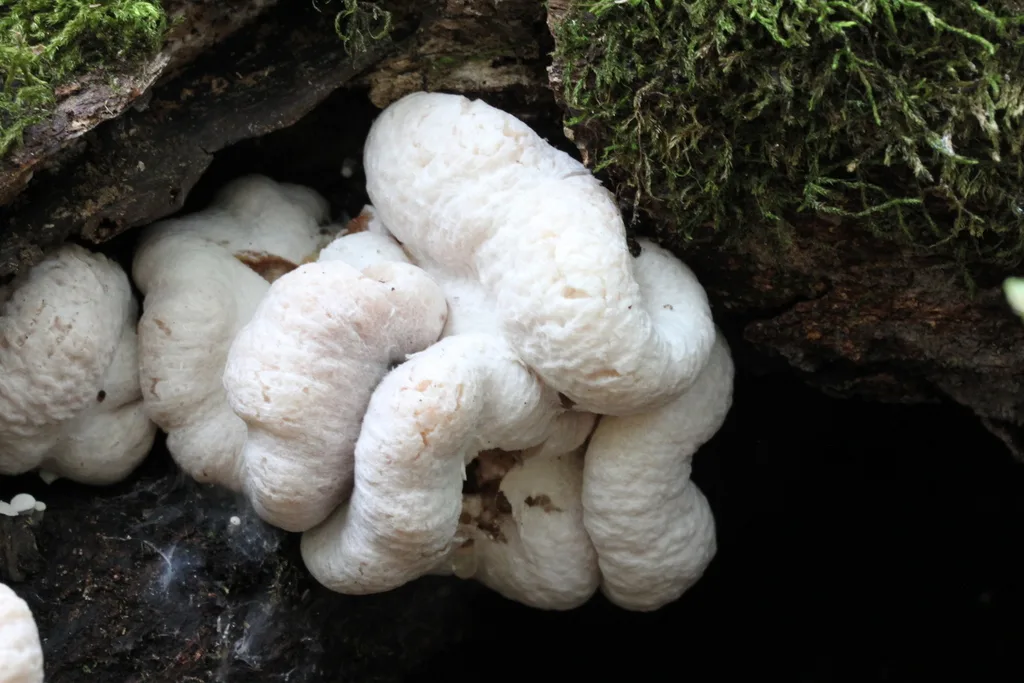
The lumps are whitish, irregular and 2 to 10 cm high, and they brown with age. The gilled form nearby is gray, with pink gills and a pink spore print. Without the lumps, the gilled form is easily confused with many other gray and brown Entolomas.
Honey Mushroom (Armillaria mellea)
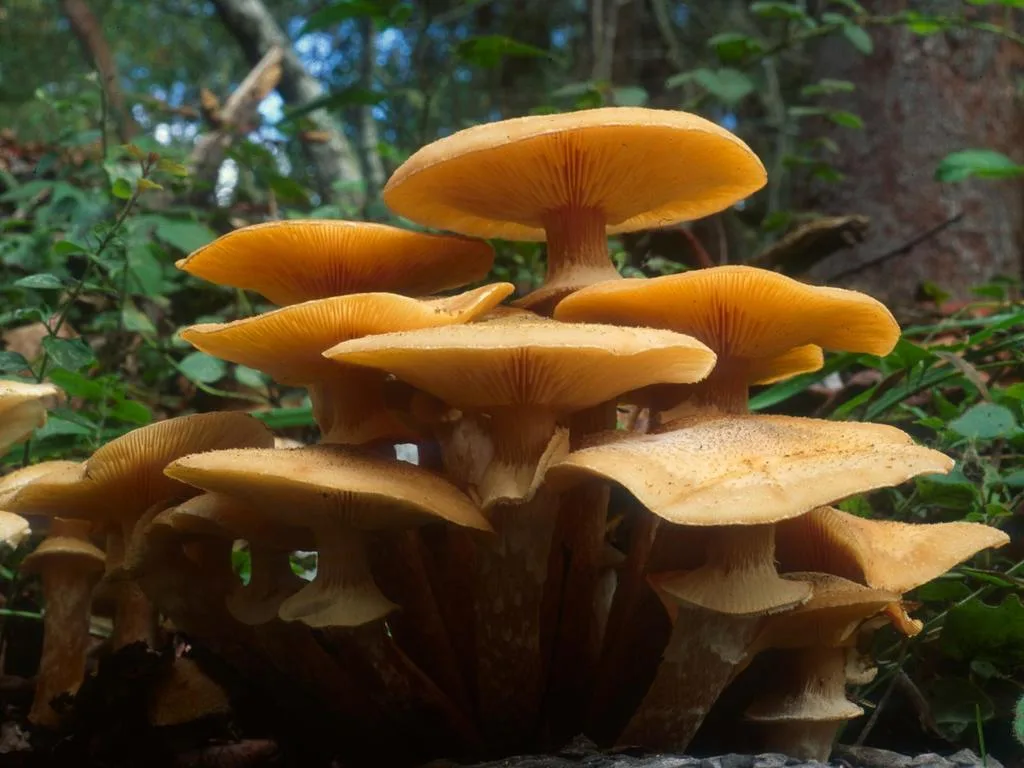
Honey mushrooms grow in clusters at the bases of trees and stumps, especially oaks, and over buried wood. The Missouri Department of Conservation describes honey-colored caps 1 to 6 inches wide with black hairy scales in the center, a whitish ring on the stem and a white spore print. Its look-alikes include the deadly galerina, which is smaller with a smooth cap and brown spores. See our honey mushroom identification guide and our Galerina marginata guide.
Gem-Studded Puffball (Lycoperdon perlatum)
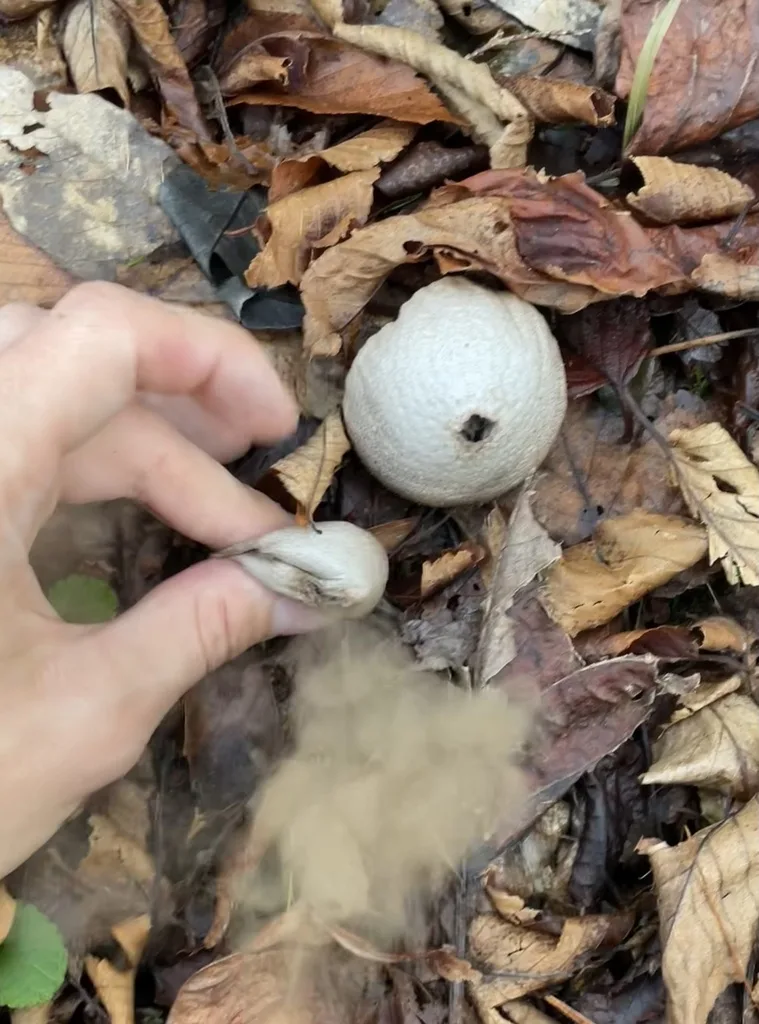
Puffballs are white, rounded balls, with or without spiny warts, that open by a pore at the top. Missouri gives a common size of 1 to 2.5 inches wide. A young puffball is pure white and featureless inside, and it turns to brown dust with age.
Common Earthball (Scleroderma citrinum)
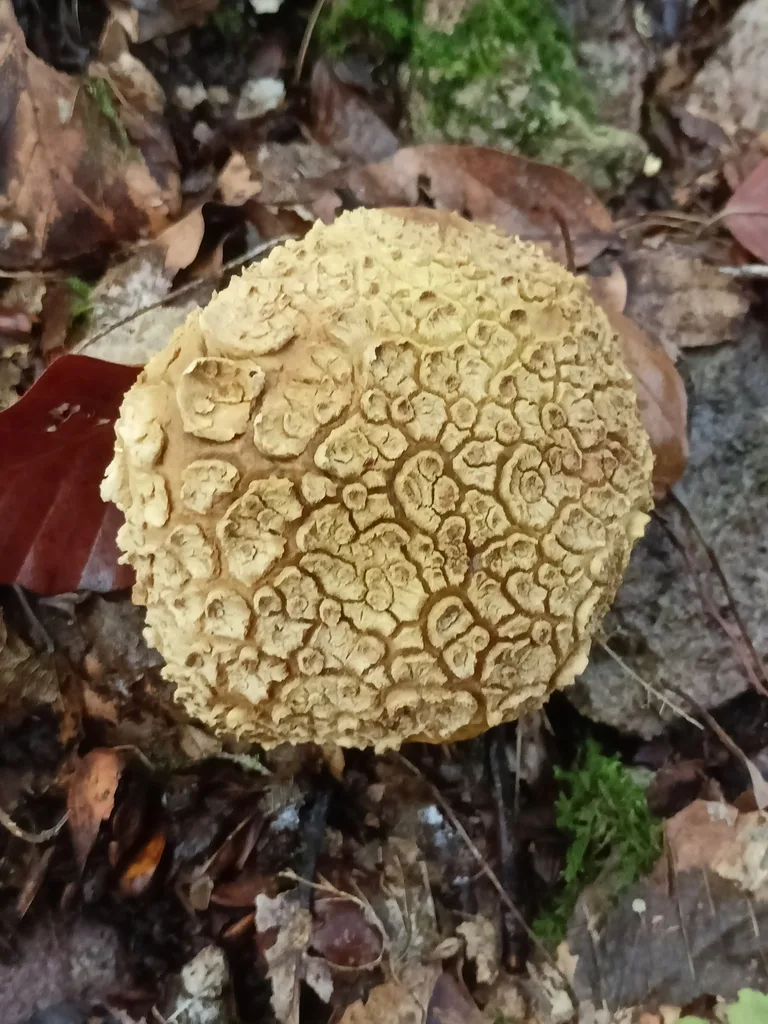
The common earthball is 1 to 4 inches wide, with a thick, leathery, warty rind that is yellowish brown. Very young ones are nearly white inside. They become marbled, then purplish and blackish with age. The Missouri Department of Conservation calls it poisonous, with upset stomach, nausea and vomiting. See our Scleroderma citrinum guide.
Destroying Angel (Amanita bisporigera)
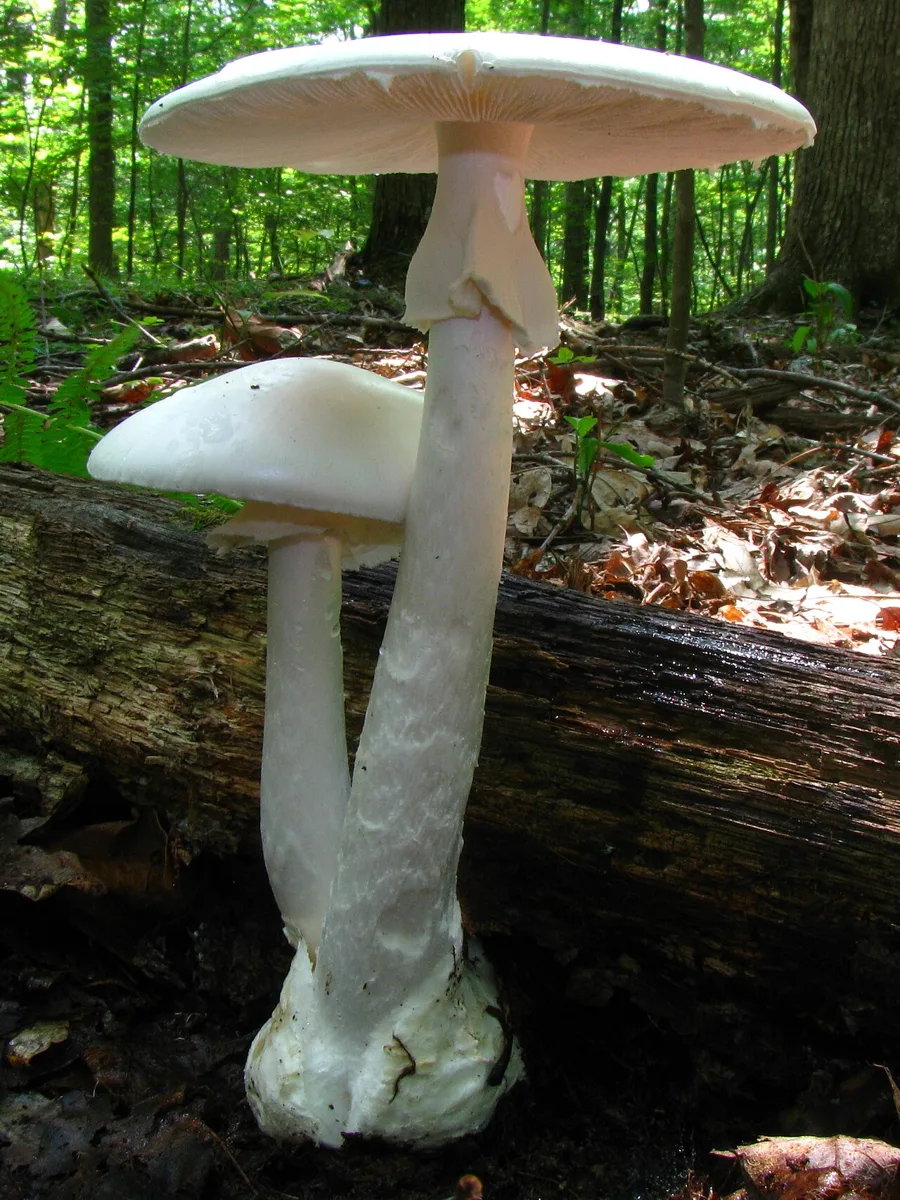
Every Amanita starts as an egg-shaped button that can resemble a small puffball, according to Missouri's guide. One cap of a destroying angel can kill a person. The same guide says Amanitas account for 90 percent of mushroom-related deaths in the United States. Cut in half, the egg shows the outline of a cap and stem. Learn the adult form in our destroying angel guide.
Livid Entoloma (Entoloma sinuatum)
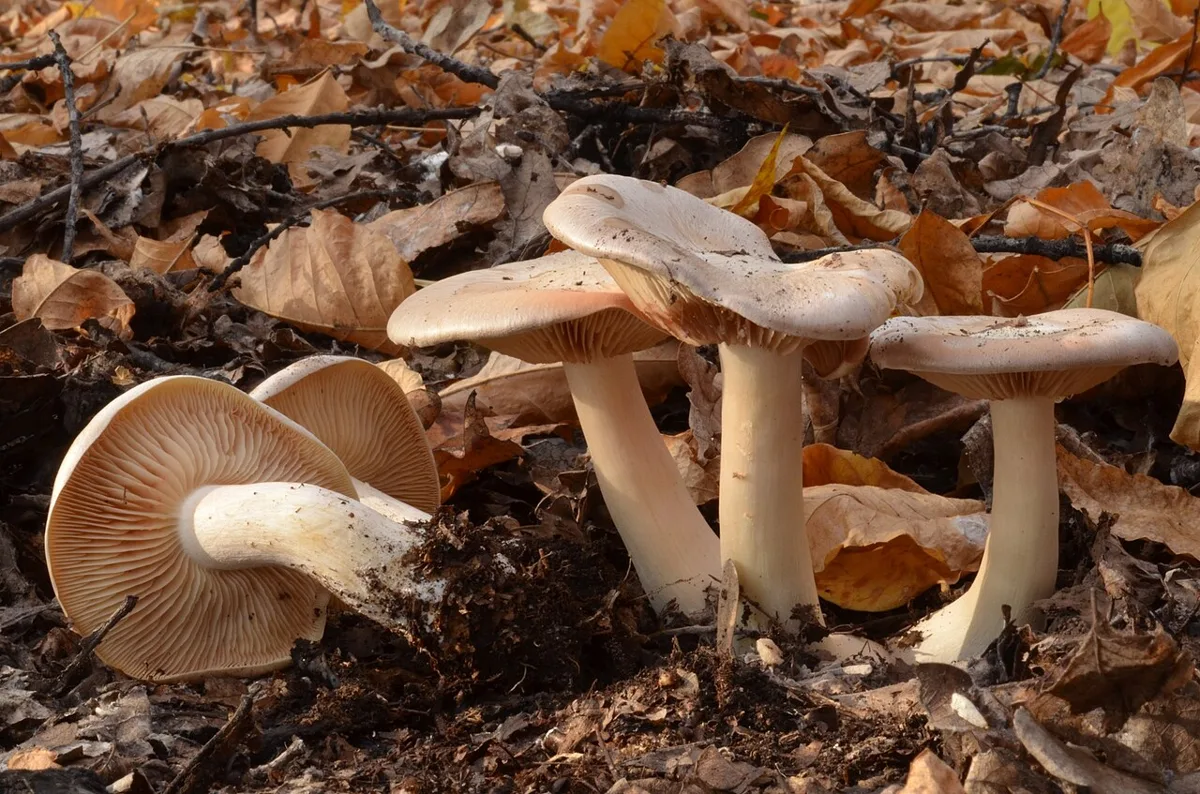
The livid entoloma, also called the lead poisoner, is a large pale Entoloma with a cap 6 to 15 cm across. Its gills start yellowish white and turn pink, and it has no ring. First Nature calls it very poisonous, with severe stomach pain, vomiting and diarrhea that can last a long time, and at least one death attributed to it. It occurs in many parts of North America.
Shrimp of the Woods vs Look-Alikes: Side-by-Side Comparison
The dangerous mix-ups are deadly Amanita eggs among white lumps and poisonous Entolomas among pink-gilled mushrooms. Earthballs cause vomiting. Honey mushrooms are edible when cooked, but the deadly galerina is one of their look-alikes. Use this table after the cut test, not instead of it.
| Mushroom | Shape | Inside or gills | Spore print | Risk |
|---|---|---|---|---|
| Shrimp of the woods | Irregular white lump | White and pinkish areas, no outline | Not used for the lumps | Called edible; cook very well |
| Gilled E. abortivum | Gray capped mushroom | Gray gills turning pink | Pink | Avoid; easy to confuse |
| Livid entoloma | Large pale capped mushroom | Yellowish gills turning pink | Pink | Poisonous |
| Honey mushroom | Clustered capped mushrooms with a ring | Whitish gills | White | Stomach upset in some people |
| Puffball | Round ball, pore at top | Pure white, even | Dusty brown spores when mature | Edible only when white and confirmed |
| Earthball | Round ball, thick warty rind | Marbled, then purplish black | Blackish brown | Poisonous |
| Destroying angel egg | White egg | Outline of cap and stem | White in adults | Deadly |
Amatoxin symptoms are delayed. NAMA places them 6 to 24 hours after eating, while the liver and kidneys are already being damaged. For the death cap and its relatives, see our death cap identification guide.
Is Shrimp of the Woods Edible?
Sources that rate it call the aborted form edible, but they warn against the gilled form, and the lumps contain honey mushroom tissue that some people react to. Nobody should eat one based on this page. A wild mushroom needs a confident identification by an experienced person first.
- Tom Volk calls the lumps edible but warns that several similar Entoloma species make the gilled form risky.
- Midwest American Mycological Information recommends harvesting only the aborted form, because many similar Entolomas are poisonous.
- The same group says only the aborted form may be gathered and sold under Michigan's rules for wild-foraged mushrooms.
- A North American field guide gives no edibility information.
The honey mushroom part matters. The 2001 study and the 2021 study both found Armillaria tissue in the lumps. The Missouri Department of Conservation says honey mushrooms cause stomach upset in some people. The NAMA 2006 to 2017 poisoning summary lists adults with vomiting and diarrhea after honey mushrooms, both cooked and raw. We found no Entoloma abortivum case in that summary.
The same NAMA summary does list two adults in Newfoundland who ate a cooked white mushroom recorded as Entoloma cf. sinuatum. Their vomiting began 45 minutes later and lasted 5 hours. Tom Volk's advice for anything containing Armillaria is to cook it very well. Our poisonous vs edible mushrooms guide explains why simple rules fail.
Common Identification Mistakes
Skipping the Cut
A white lump on the ground can be a deadly Amanita egg. Slice every one from top to bottom through the base.
Treating the Gilled Form Like the Lumps
The gray, pink-gilled form looks like many other Entolomas, including poisonous ones. Sources that discuss eating this fungus limit it to the aborted form.
Assuming Every Lump Near a Stump Is a Shrimp
Earthballs grow on wood debris near trees, and puffballs grow on decaying wood too. Check the inside and look for honey mushrooms and gray Entolomas nearby.
Forgetting the Honey Mushroom Neighbors
Honey mushroom clusters share the site, and the deadly galerina can resemble them. A brown spore print rules out a honey mushroom. Our guide to identifying a mushroom you found covers the full process.
Picking Old or Soggy Lumps
Brown-spotted, waterlogged or wormy lumps should be left behind, according to Midwest American Mycological Information. Rot also makes the inside harder to read.
Frequently Asked Questions
What is shrimp of the woods?
Shrimp of the woods is the white, lumpy aborted form of Entoloma abortivum. Research shows the lumps are honey mushrooms deformed by the Entoloma. They grow near rotting hardwood in late summer and fall.
Is shrimp of the woods edible?
Sources that rate it call the aborted form edible and advise cooking it very well. The lumps contain honey mushroom tissue, which upsets some people's stomachs. Never eat one without an expert confirming it and cutting it open first.
What does the inside of shrimp of the woods look like?
The inside has white and pinkish areas and can be somewhat pithy. It shows no outline of a cap, gills or stem. An outline means it may be a deadly Amanita egg.
Does Entoloma parasitize honey mushrooms, or the other way around?
Current research supports Entoloma abortivum as the parasite. A 2001 study showed the lumps are malformed honey mushrooms filled with Entoloma threads. A 2021 gene study found that most activity in the lumps comes from the Entoloma.
What looks like shrimp of the woods?
Young puffballs, earthballs and Amanita eggs can all look like white lumps. Cutting them in half separates them. The gilled form of the fungus also resembles poisonous Entolomas such as the livid entoloma.
When does shrimp of the woods grow?
It fruits in late summer and fall. Honey mushrooms, its host, appear from August through November in Missouri. It can return to the same spot for years.
Where does shrimp of the woods grow?
It grows near decaying wood in hardwood forests east of the Rocky Mountains. It also turns up in lawns, parks and wood chips over rotting wood. Honey mushrooms usually grow nearby.
What color is the Entoloma abortivum spore print?
The gilled form leaves a pink spore print. Honey mushrooms leave a white print, and the deadly galerina leaves a brown one. The lumps themselves are not used for a spore print.
Is the gilled aborted entoloma poisonous?
Midwest American Mycological Information considers the gilled form edible, but it is easy to confuse with poisonous Entolomas. Sources recommend collecting only the aborted lumps. The livid entoloma, a pink-gilled look-alike, causes severe and long-lasting stomach illness.
Final Safety Reminder
Shrimp of the woods is one of the stranger mushrooms in an eastern forest, and its white lumps share the ground with deadly Amanita eggs. Never eat a wild mushroom based on a chart, a photo or an app. Photograph the outside, the cut face, the base and any gilled mushrooms nearby, then check your find with our free mushroom identifier and a local mycological club. If someone may have eaten a poisonous mushroom in the US, call Poison Control at 1-800-222-1222.
Sign in to leave a comment and join the discussion.
 Species Guide
The wine cap mushroom ( Stropharia rugosoannulata ) is a large, wine-red mushroom that grows in wood chip beds, mulch and gardens from spring through fall....
 Species Guide
A cup fungus is a mushroom shaped like a cup, saucer or goblet, with no gills, that makes its spores on the inner surface. The most common US cups are red...
 Species Guide
A pheasant back mushroom is a large, fan-shaped polypore with brown scales on a cream to tan cap, big angular pores underneath and a short stem that is...