Wine Cap Mushroom Identification Chart With Pictures
— views
The wine cap mushroom (Stropharia rugosoannulata) is a large, wine-red mushroom that grows in wood chip beds, mulch and gardens from spring through fall. It has a thick white ring split like a cogwheel underneath, and it leaves a dark purple-brown to purple-black spore print. Gardeners grow it on purpose. Wood chips can also hold the deadly Galerina and hallucinogenic Psilocybe species, so every wild wine cap needs expert confirmation.
This wine cap mushroom identification chart with pictures covers the features that confirm a wine cap, the ring and print check, the wood chip mushrooms that look like it and why gardeners grow it.
Key Takeaways
- A fresh wine cap has a wine-red to reddish-brown cap, gills that darken to purple-black and a thick white ring with a cogwheel underside.
- The cap fades to tan or yellowish with age, so an old wine cap can look like an ordinary brown mushroom.
- The spore print is dark purple-brown to purple-black. Rusty brown means Galerina, and bright brown means Agrocybe.
- A purple-brown print alone is not enough. Redlead roundheads, sulfur tuft and the wavy cap Psilocybe leave similar prints.
- The deadly Galerina grows on rotting wood and urban wood chips, and its amatoxins are not destroyed by cooking.
- Wine caps are rated edible and choice by Midwest Mycology, but each mushroom from a bed still needs a full check.
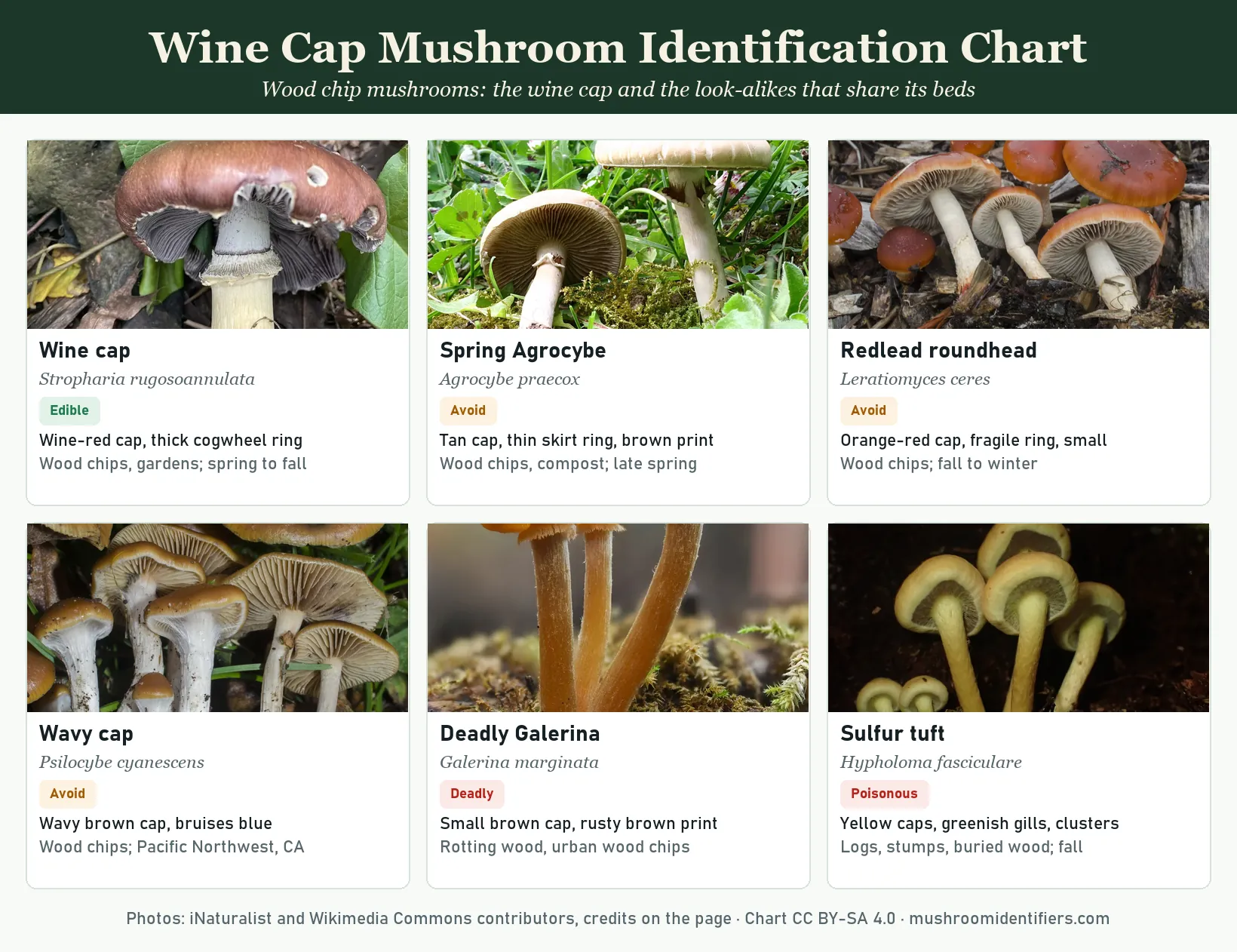
Wine Cap Mushroom Identification Chart
Use this chart to compare a mushroom in wood chips with the wine cap and the species that share its beds. Check the ring and the spore print on every specimen, because cap color fades with age and several prints look alike.
| Mushroom | Key features | Where and when | Spore print | Edibility or risk |
|---|---|---|---|---|
| Wine cap (Stropharia rugosoannulata) | Wine-red cap 4 to 13 cm, fading tan; thick cogwheel ring; gills purple-black with age | Wood chips, gardens, mulch; spring through fall | Dark purple-brown to purple-black | Edible; confirm ID |
| Spring Agrocybe (Agrocybe praecox) | Yellow-brown to tan cap 2 to 9 cm; thin skirt-like white ring | Wood chips, compost; mostly late spring and early summer | Bright medium brown | Avoid |
| Redlead roundhead (Leratiomyces ceres) | Reddish-brown to orange-brown cap 2.5 to 6 cm; fragile ring that soon disappears | Wood chips; early fall to late winter in California | Purple-brown | Avoid; edibility unknown |
| Wavy cap (Psilocybe cyanescens) | Brown cap 2 to 4.5 cm with a wavy edge; bruises blue; faint ring zone | Wood chips; Pacific Northwest and California | Purple-brown to purple-gray | Hallucinogenic; Galerina is mistaken for it |
| Deadly Galerina (Galerina marginata) | Honey to cinnamon-brown cap 1.5 to 5 cm; thin ring; rusty gills | Rotting wood and urban wood chips; spring and fall | Rusty brown | Deadly: amatoxins |
| Sulfur tuft (Hypholoma fasciculare) | Clustered yellow to orange caps 2 to 5 cm; gills yellow, then greenish | Logs, stumps and buried wood; fall and winter | Purple-brown | Poisonous |
Details come from MykoWeb and the Beaty Biodiversity Museum at UBC. The chart pictures show the typical form, so compare your find with real photographs too.
What Is a Wine Cap Mushroom?
The wine cap is a large, gilled mushroom that breaks down wood debris and is common in mulched gardens, landscaped beds and wood chip paths. Its scientific name is Stropharia rugosoannulata. The Cornell Small Farms Program also calls it "Garden Giant" and lists it as one of the easiest mushrooms for beginners to grow outdoors.
A North American field guide describes it as widespread and fairly common in North America east of the Great Plains, with occasional reports from Washington and British Columbia. It is saprobic, which means it feeds on dead organic matter. It sometimes appears along stream beds after spring floods. A white form also exists treats it on a separate page.
How Do You Identify a Wine Cap Mushroom?
A wine cap combines a wine-red cap, a thick white ring with a split underside, gills that turn purple-black and a dark purple-brown spore print. It grows from wood chips, mulch or chip-rich soil. No single feature is enough, because the color fades and other mushrooms in the same beds share the dark print. Check all of the features below on the same specimen.
Cap
Fresh caps are wine red to reddish brown and sticky, then glossy and dry. They fade to yellowish brown or yellowish and may crack with age. One species account gives 4 to 13 cm across. Midwest Mycology gives a far wider range, 5 to 37 cm, so very large caps are possible.
Gills
The gills are attached to the stem and closely spaced. They start whitish to pale gray and darken to purplish gray, then purple-black, as the spores mature.
Stem and Base
The stem is stout and white, yellowing to brownish with age. A standard reference gives 8 to 16 cm long and 1 to 2 cm thick. White mycelial threads attach the base to the chips. The flesh is white, firm and does not change color when cut.
Ring
The ring is thick and white to yellowish. Its upper surface is finely grooved and often blackened by falling spores. The underside is split into radial segments, which one field guide describes as "cogwheeled." None of the look-alikes on this page has a ring like it.
Spore Print
One field guide records a dark purple-brown to purplish black print. Midwest Mycology calls it purple-black. Our guide on how to take a spore print explains the method.
Habitat and Season
Wine caps grow scattered or in clusters on wood chips, in gardens and in other cultivated ground. A North American field guide gives the season as spring through fall. Midwest Mycology notes that they are common in landscaped urban spots.
The Ring and Print Check
The fastest way to sort a mushroom in wood chips is to check two things in order: the ring, then the spore print. Each wood chip look-alike fails at least one of them. A thick cogwheel ring plus a purple-black print points toward a wine cap. Any other combination points away from it. The table shows which look-alikes share which trait.
| Check | Wine cap | Shared by | Fails the check |
|---|---|---|---|
| Ring | Thick, white, cogwheel underside | No look-alike on this page has the same thick, split ring | Agrocybe (thin skirt), Galerina (thin, often lost), redlead roundhead (fragile, soon gone), Psilocybe (faint hairy zone) |
| Spore print | Dark purple-brown to purple-black | Redlead roundhead, sulfur tuft, wavy cap Psilocybe | Galerina (rusty brown), Agrocybe (bright brown) |
| Gills | Pale gray, then purple-black | Redlead roundhead (gray-brown to brownish purple) | Sulfur tuft (yellow to greenish), Galerina (yellowish to rusty) |
| Bruising | Flesh does not change | Most look-alikes | Psilocybe cyanescens (bruises blue) |
| Size | Cap usually 4 to 13 cm | Agrocybe (up to 9 cm) | Galerina, Psilocybe and the redlead roundhead are mostly under 6 cm |
The ring check matters most in late season. Rain and age wear the ring, and the cap fades. A faded mushroom with a damaged ring cannot be confirmed as a wine cap by eye.
Wine Cap and Other Wood Chip Mushrooms in the US
This section covers the wine cap and five mushrooms that grow in or near wood chips: spring Agrocybe, the redlead roundhead, wavy cap Psilocybe, the deadly Galerina and sulfur tuft. They differ in ring, print and size. The descriptions below come from the sources named in each section.
Wine Cap (Stropharia rugosoannulata)
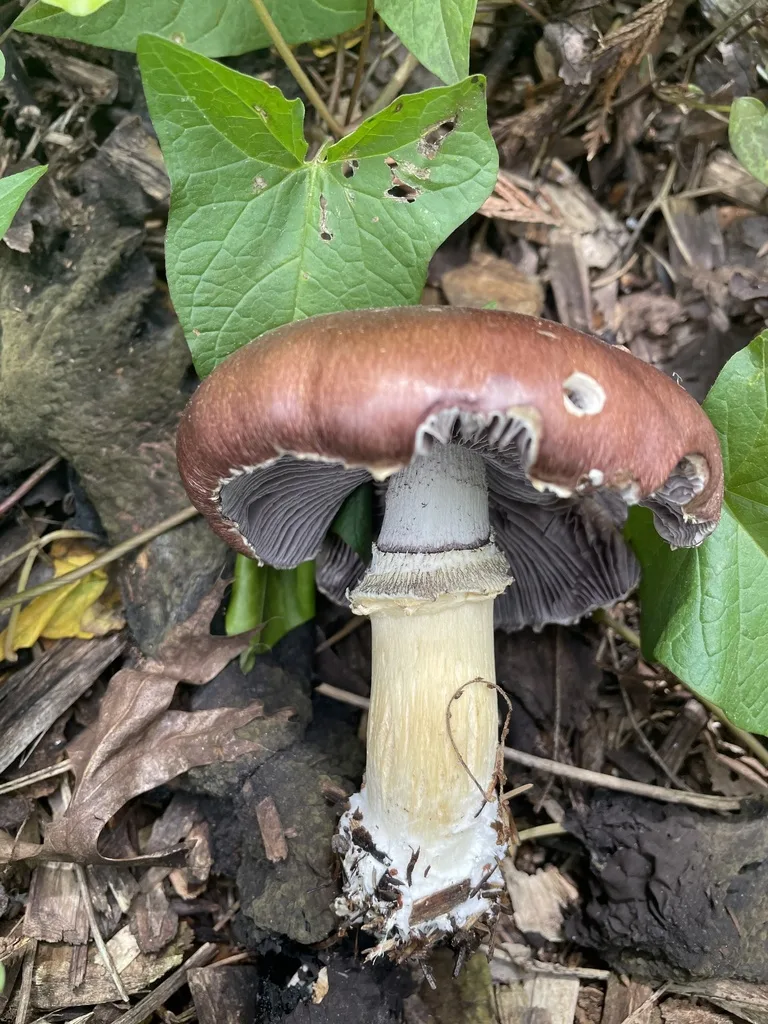
The wine cap is the largest mushroom on this page. Its red cap, cogwheel ring and purple-black gills make a young specimen distinctive. Midwest Mycology states that no other mushroom has a burgundy-red cap with purple gills. That holds only while the cap is fresh. Older caps fade toward tan.
Spring Agrocybe (Agrocybe praecox)
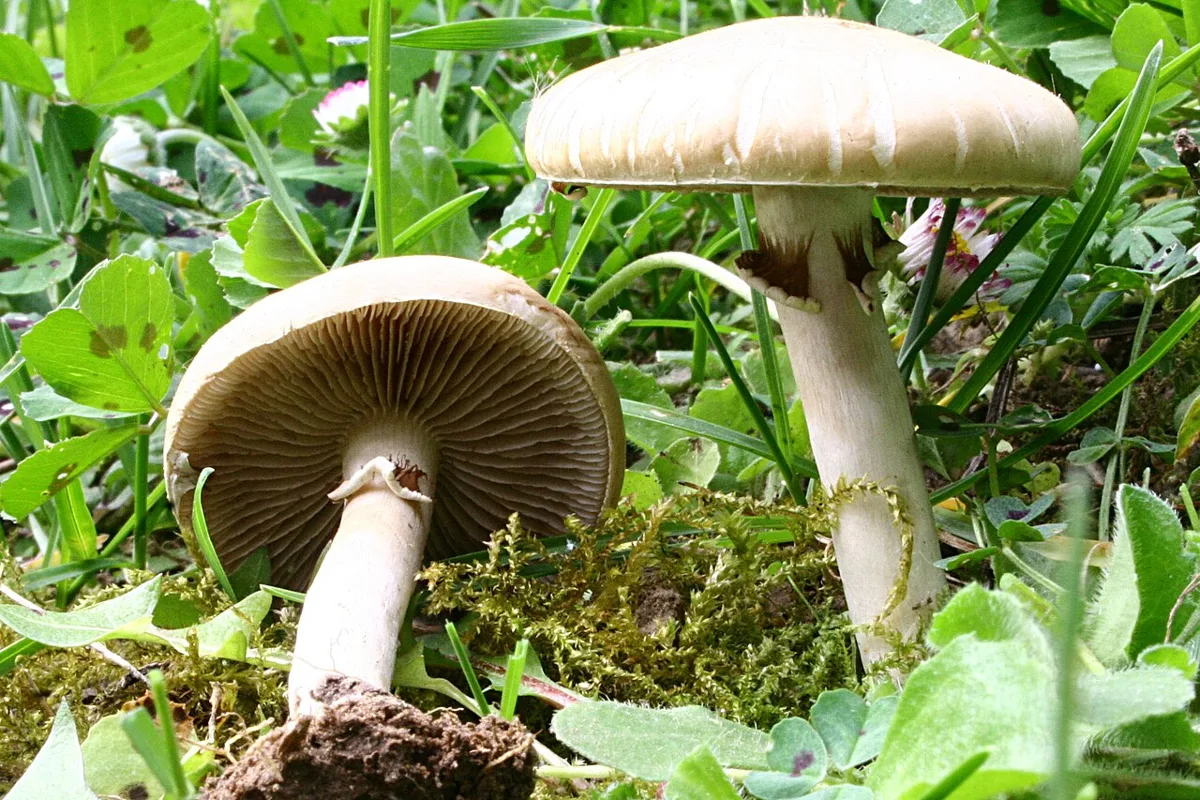
This brown-spored mushroom grows on wood chips and garden compost, mostly in late spring and early summer. Its cap is yellow-brown, fading to tan or nearly white, and 2 to 9 cm across. It has a thin, skirt-like white ring that often gets a brown upper edge. A bright brown spore print separates it from a wine cap.
Redlead Roundhead (Leratiomyces ceres)
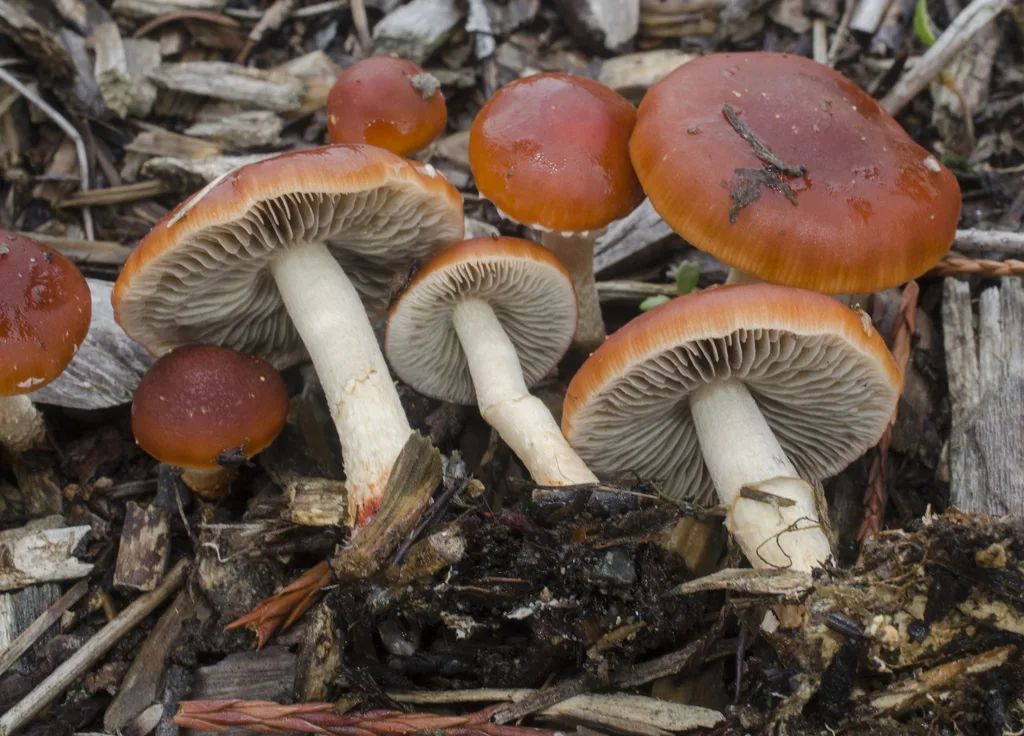
The redlead roundhead is a smaller, reddish-brown to orange-brown mushroom that is common in wood chips but rare in natural woods. Its cap is 2.5 to 6 cm across. Its spore print is purple-brown, just like a wine cap's. The ring is the difference: it is thin, fragile and soon gone. MykoWeb lists its edibility as unknown. Older books used the names Stropharia aurantiaca and Hypholoma aurantiaca, which MykoWeb treats as misapplied.
Wavy Cap (Psilocybe cyanescens)
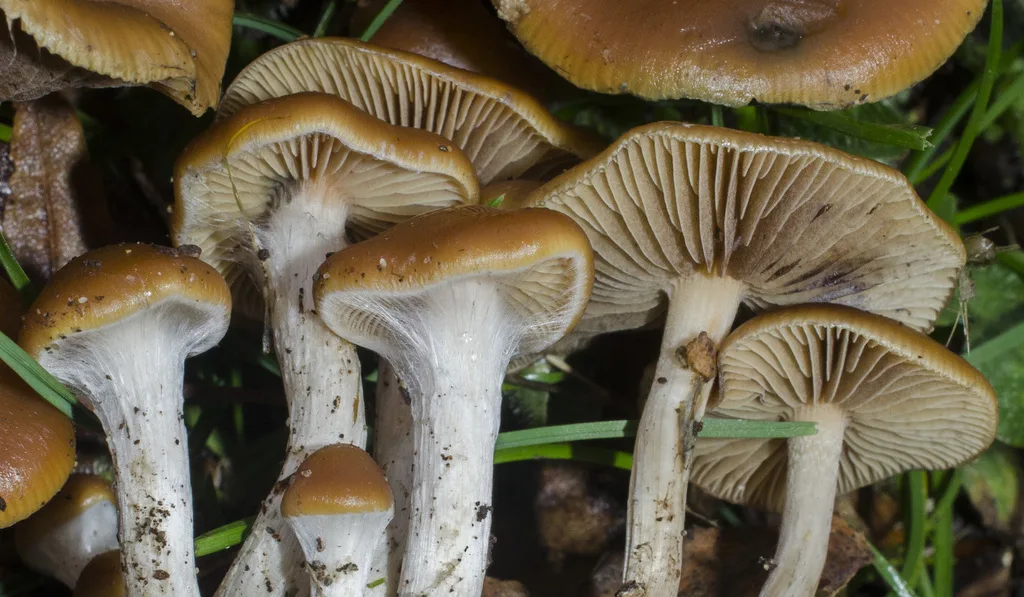
This small Psilocybe has a brown cap 2 to 4.5 cm across with a wavy edge, fading to buff. The flesh and stem bruise blue. Its spore print is purple-brown to purple-gray, according to MykoWeb. It grows on woody debris and wood chips from late summer in watered areas through mid-winter. MykoWeb lists it as hallucinogenic. The section on Psilocybe below covers where it occurs.
Deadly Galerina (Galerina marginata)
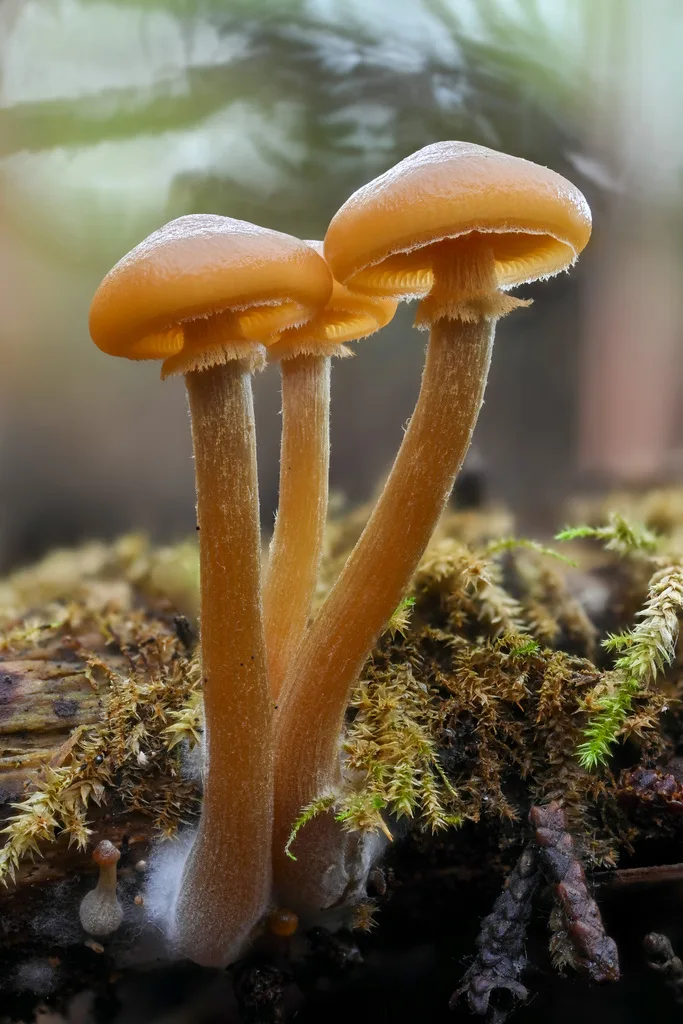
This is the most dangerous mushroom on this page. It is a small, sticky, honey-brown to cinnamon mushroom with a thin ring that may disappear. Its gills turn rusty brown, and its spore print is rusty brown. One species account places it on rotting hardwood and conifer wood, mostly in spring and fall. The Beaty Biodiversity Museum notes that it also grows on wood chips in urban areas. MykoWeb rates it deadly poisonous because it contains alpha-amanitin. See our Galerina marginata guide.
Sulfur Tuft (Hypholoma fasciculare)
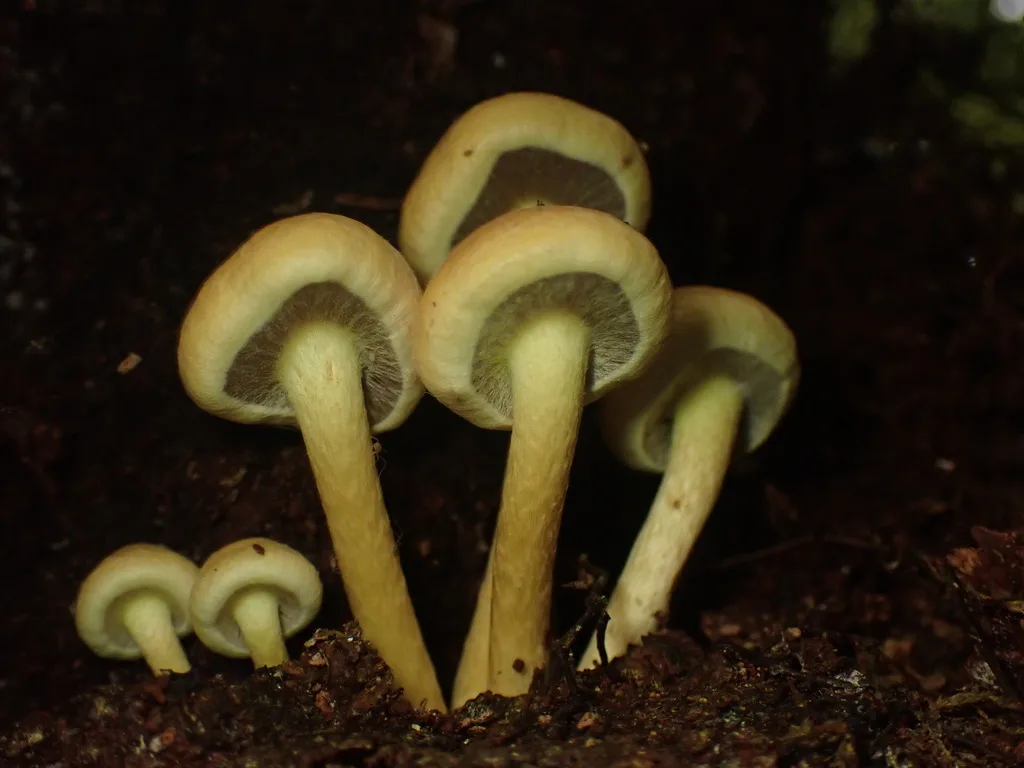
Sulfur tuft grows in clusters on logs and stumps, and sometimes in grass from buried wood, according to MykoWeb. Its caps are yellow to orange with a darker center. Its gills start yellow, turn greenish and then purple-brown. Its spore print is purple-brown, close to a wine cap's. MykoWeb rates it probably poisonous. Our sulfur tuft guide covers the poisoning reports.
Wine Cap Look-Alikes: Side-by-Side Comparison
The deadly Galerina is the look-alike that matters most, and the rusty brown spore print is the clearest way to rule it out. Sulfur tuft is poisonous and Psilocybe species are hallucinogenic. Agrocybe and the redlead roundhead are not known as dangerous, but their edibility is not established. The table compares the dangerous ones with the wine cap.
| Feature | Wine cap | Deadly Galerina | Wavy cap Psilocybe | Sulfur tuft |
|---|---|---|---|---|
| Risk | Edible, after expert ID | Deadly, amatoxins | Hallucinogenic | Poisonous |
| Cap | Wine red, fading tan, 4 to 13 cm | Honey to cinnamon, 1.5 to 5 cm | Brown with a wavy edge, 2 to 4.5 cm | Yellow to orange, 2 to 5 cm |
| Ring | Thick, cogwheel underside | Thin, often lost | Faint hairy zone | Faint zone at most |
| Gills | Pale gray to purple-black | Yellowish to rusty brown | Cinnamon-brown to dark gray-brown | Yellow to greenish to purple-brown |
| Spore print | Purple-brown to purple-black | Rusty brown | Purple-brown to purple-gray | Purple-brown |
| Bruising | None | None noted | Blue | None noted |
Galerina symptoms are delayed. NAMA places the first stomach symptoms of amatoxin poisoning 6 to 24 hours after eating. The Missouri Department of Conservation says 10 or more hours, followed by possible liver or kidney damage. Anyone who may have eaten Galerina needs medical care at once, even before symptoms start. Our guide to small brown mushrooms covers more of this group.
Do Psilocybe Mushrooms Grow in Wood Chips?
Yes. Three psilocybin-containing species, Psilocybe cyanescens, P. allenii and P. ovoideocystidiata, grow in urban wood chip and mulch beds in the US. National Geographic describes the Pacific Northwest, including California, Oregon and Washington, as the center of these urban populations. In California, all three are found only in urban settings.
- Psilocybe cyanescens: the wavy cap of the Pacific Northwest. National Geographic reports it documented in most of the US.
- Psilocybe allenii: first described in 2012. In California it is found only in urban settings, per the same report.
- Psilocybe ovoideocystidiata: grows wild in the Ohio River Valley and also turns up in wood chips.
How they spread is not settled. National Geographic presents the movement of mycelium in wood chip shipments as a hypothesis with only anecdotal US evidence. Wind-blown spores are another suggested route.
These species matter on a wine cap page for safety reasons. P. cyanescens shares the purple-brown spore print, and National Geographic notes that Psilocybe species turn deep purplish blue when bruised. NAMA lists about 20 Psilocybe species among its mushroom poisoning syndromes, with effects that usually start within an hour. NAMA also warns that amatoxin-bearing little brown mushrooms may be mistaken for hallucinogenic species. MykoWeb records several poisonings and at least one death after people mistook Galerina for Psilocybe. Keep children and pets away from mushrooms in mulch. If a dog eats one, see what to do if your dog ate a mushroom. For identification background, see our psychedelic mushroom identification guide.
Can You Eat Wine Cap Mushrooms?
Wine caps are widely regarded as edible, and Midwest Mycology calls them "edible and choice," but a mushroom from a wood chip bed still needs a full identification first. The Cornell Small Farms Program includes them in its outdoor mushroom production guidance. Deadly Galerina also grows in urban wood chips, so a bed that once grew wine caps does not prove that every later mushroom is one. Nobody should eat a wild mushroom based on this page.
Midwest Mycology adds several precautions:
- Some people may have a specific allergy to wine caps.
- Cook all mushrooms, including this one, before eating.
- Eat a small portion the first time, and do not try more than one new species at once.
- Discard mushrooms with holes in the stem or cap, which indicate fly larvae.
The white form has its own entry on and we did not find an authoritative edibility source for it, so treat it with extra caution. Read our backyard mushroom identification guide for the other species that turn up in garden beds.
Why Do Gardeners Grow Wine Caps?
Gardeners grow wine caps because they are easy to establish in existing mulched beds and keep fruiting for several seasons with little care. The Cornell Small Farms Program says all you need is hardwood wood chips or straw. It suggests adding the mushroom to mulched vegetable beds, berry plantings and fruit tree areas. Trays or pots also work.
- Timing: beds can be inoculated at any point in the growing season, according to Cornell.
- First flush: fruiting starts about 2 to 6 months after inoculation, as long as temperatures stay warm enough.
- Lifespan: an established patch can last several seasons and can be used to start new ones.
The fungus also has an unusual habit in the soil. A 2006 study in Applied and Environmental Microbiology by Luo and colleagues found that wine cap mycelium makes spiny, star-shaped cells called acanthocytes. In lab tests, purified acanthocytes immobilized over 95% of one nematode species within 10 minutes by piercing the worms' outer layer. In soil, they immobilized 22.8 to 43.4% of worms within 2 days. The study did not test garden pest control.
Mulched beds grow many mushrooms besides the one you planted, so check every flush before picking. Our roundup of mushroom grow kits covers indoor options, and our garden mushroom identification guide covers what else appears in beds.
Common Identification Mistakes
Most wine cap mistakes come from trusting the bed instead of the mushroom, or from relying on the spore print alone. Wood chips host several species at once, and three of the look-alikes on this page leave a similar dark print. These four errors are the ones the sources above point to most clearly.
Assuming Everything in the Bed Is a Wine Cap
Planting wine cap spawn does not stop other fungi from fruiting. Galerina, Agrocybe and Psilocybe all grow in wood chips. Check each mushroom on its own.
Trusting a Purple-Brown Print Alone
The redlead roundhead, sulfur tuft and the wavy cap Psilocybe also leave purple-brown prints. The print rules out Galerina and Agrocybe, but the ring has to confirm the rest.
Identifying a Faded Cap by Color
Old wine caps fade to tan or yellowish. A faded cap with a worn ring looks like many brown mushrooms and should not be eaten.
Missing a Small Mushroom Among Large Ones
Galerina is much smaller than a wine cap. A handful picked quickly from a mixed bed can include it. Sort every mushroom one by one.
Frequently Asked Questions
What does a wine cap mushroom look like?
A fresh wine cap has a wine-red to reddish-brown cap, a stout white stem and a thick white ring with a split, cogwheel underside. Its gills turn from pale gray to purple-black. The cap fades to tan or yellowish with age.
Are wine cap mushrooms edible?
Wine caps are widely regarded as edible, and Midwest Mycology calls them choice. Some people are allergic, and sources advise cooking them and starting with a small portion. Every mushroom still needs expert confirmation, because deadly Galerina can grow in the same wood chips.
What color is a wine cap spore print?
A wine cap leaves a dark purple-brown to purple-black spore print. A rusty brown print means Galerina, and a bright brown print means Agrocybe. A purple-brown print alone does not confirm a wine cap.
What looks like a wine cap mushroom?
The redlead roundhead, spring Agrocybe, Psilocybe species, sulfur tuft and the deadly Galerina all grow in or near wood chips. The thick cogwheel ring and the large size set a wine cap apart. Galerina is the dangerous one.
Can wine caps be confused with Psilocybe?
The wavy cap, Psilocybe cyanescens, leaves a purple-brown spore print and grows in wood chip beds. It is much smaller than a wine cap, bruises blue and lacks the thick cogwheel ring. Galerina is also mistaken for Psilocybe, and that error has caused deaths.
Where do wine cap mushrooms grow?
Wine caps grow on wood chips, mulch, gardens and other cultivated ground. In the wild they are widespread east of the Great Plains, with occasional reports from Washington and British Columbia. They sometimes appear along flooded stream beds.
When do wine caps grow?
A standard reference gives the season as spring through fall. In a cultivated bed, fruiting starts about 2 to 6 months after inoculation if temperatures stay warm, according to Cornell Small Farms.
Why are wine caps growing in my garden?
Wine caps feed on wood chips and other woody mulch. Many beds are planted on purpose with spawn, and the fungus also occurs wild in wood chips and gardens. It does not need treatment, but every mushroom should be identified before children or pets reach it.
Is the deadly Galerina found in wood chips?
Yes. The Beaty Biodiversity Museum notes that Galerina marginata grows on wood chips in urban areas. It has a rusty brown spore print and contains amatoxins, which cooking does not destroy.
Final Safety Reminder
A fresh wine cap is one of the more distinctive mushrooms in a garden, but wood chips can also hold the deadly Galerina. Never eat a wild mushroom based on a chart, a photo or an app. Photograph the cap, the ring, the gills and a spore print, then check them with our free mushroom identifier and a local mycological club. If someone may have eaten a poisonous mushroom in the US, call Poison Control at 1-800-222-1222.
Sign in to leave a comment and join the discussion.
 Species Guide
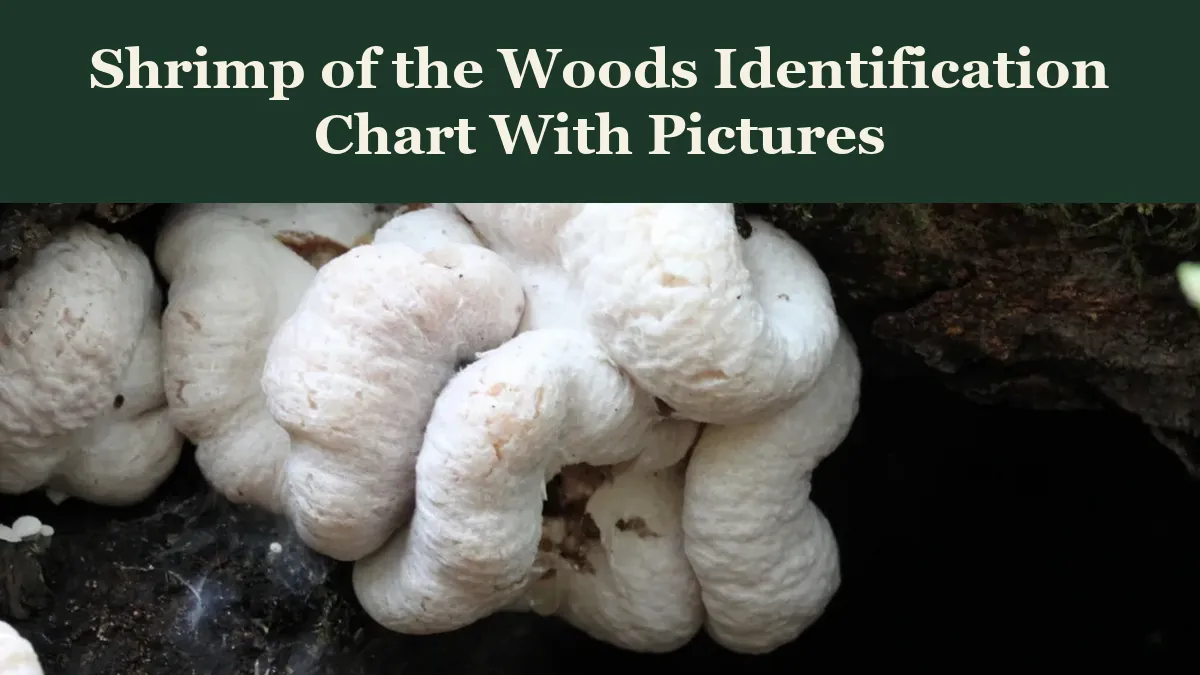
Shrimp of the woods is a common name for Entoloma abortivum , a fungus best known for the white, lumpy "aborted" form it makes near rotting hardwood in late...
 Species Guide
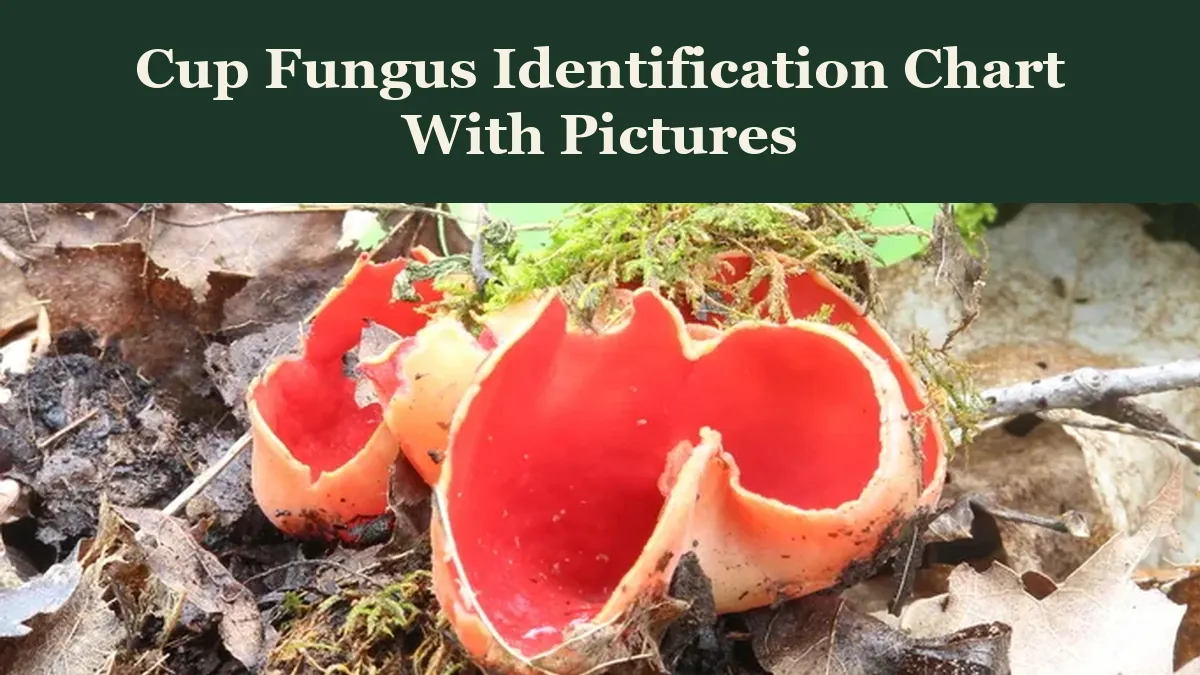
A cup fungus is a mushroom shaped like a cup, saucer or goblet, with no gills, that makes its spores on the inner surface. The most common US cups are red...
 Species Guide
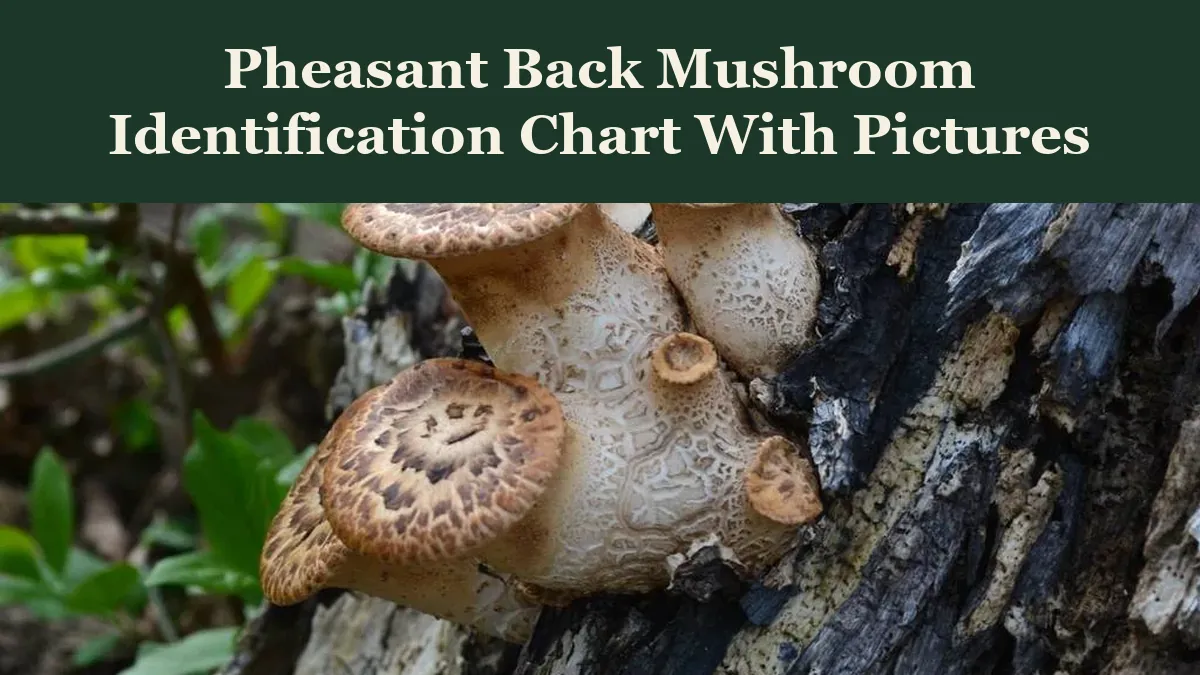
A pheasant back mushroom is a large, fan-shaped polypore with brown scales on a cream to tan cap, big angular pores underneath and a short stem that is...