Edible Mushrooms in Alaska: 20 Types, Habitats, Seasons and Foraging Tips

Nathan Cole
Mycologist · Author · Fungi Expert
Updated
Oct 7, 2026
Alaska has many edible mushrooms, including morels, king boletes, golden chanterelles, hedgehogs, oyster mushrooms and bear’s head mushrooms. Most appear during the warmer months, but their timing and distribution depend on rainfall, elevation, nearby trees and regional climate.
The state’s mushroom habitats range from Southeast Alaska’s wet coastal rainforests to the spruce, birch and aspen forests of the Interior. Learning these environments makes mushroom hunting more productive—and helps explain why a species common around one community may be absent around another.
This guide covers 20 species or groups with recognised edible uses, including several that require advanced identification. It is an educational overview, not a way to certify a wild mushroom as safe. Have specimens checked by a knowledgeable local identifier before eating them.
What Are Edible Mushrooms?
Edible mushrooms are the fruiting bodies of fungi that can be consumed when correctly identified, collected in suitable condition and properly prepared. The visible mushroom is only part of the organism; much of the fungus exists as a network called mycelium within soil, wood or other material.
Some edible fungi decompose dead wood and plant litter. Others form mycorrhizal relationships with living trees, exchanging water and nutrients for sugars. These relationships help explain where particular mushrooms grow.
An edible classification does not guarantee that everyone can tolerate a mushroom. Individual reactions, spoilage, contamination and inadequate cooking can all cause illness.
When Is Mushroom Season in Alaska?
Summer and early autumn offer the widest range of mushrooms in much of Alaska. Morels often appear earlier than many chanterelles, boletes and hedgehogs, while coastal areas can retain suitable conditions after colder inland locations have experienced frost.
| Region or habitat | General seasonal pattern | Relevant mushrooms |
|---|---|---|
| Interior burn areas | Early summer, often June into July | Fire-associated morels |
| Interior forests | Summer into early autumn | Boletes, puffballs and other forest fungi |
| Southcentral forests | Summer and autumn, depending on moisture | Boletes, hedgehogs and wood-growing species |
| Southeast coastal forests | Late summer and autumn are often productive | Chanterelles, yellowfeet, hedgehogs and tooth fungi |
| Grasslands and disturbed ground | Following suitable moisture during the growing season | Puffballs and shaggy manes |
These are broad patterns. A dry August can produce fewer mushrooms than a wet July, and elevation can shift the season even within the same area.
20 Edible Mushrooms Found in Alaska
The following list includes individual species and species groups. The numbering does not indicate abundance, flavour or identification difficulty. The final three entries deserve particular caution and are included for completeness rather than as beginner collecting recommendations.
1. Gray Fire Morel
Scientific name: Morchella tomentosa
Gray fire morels are associated with burned forests and are among Alaska’s notable seasonal mushrooms. Young specimens can look dark and finely fuzzy, becoming paler as they mature. Their appearance changes enough that colour alone is an unreliable identification feature.
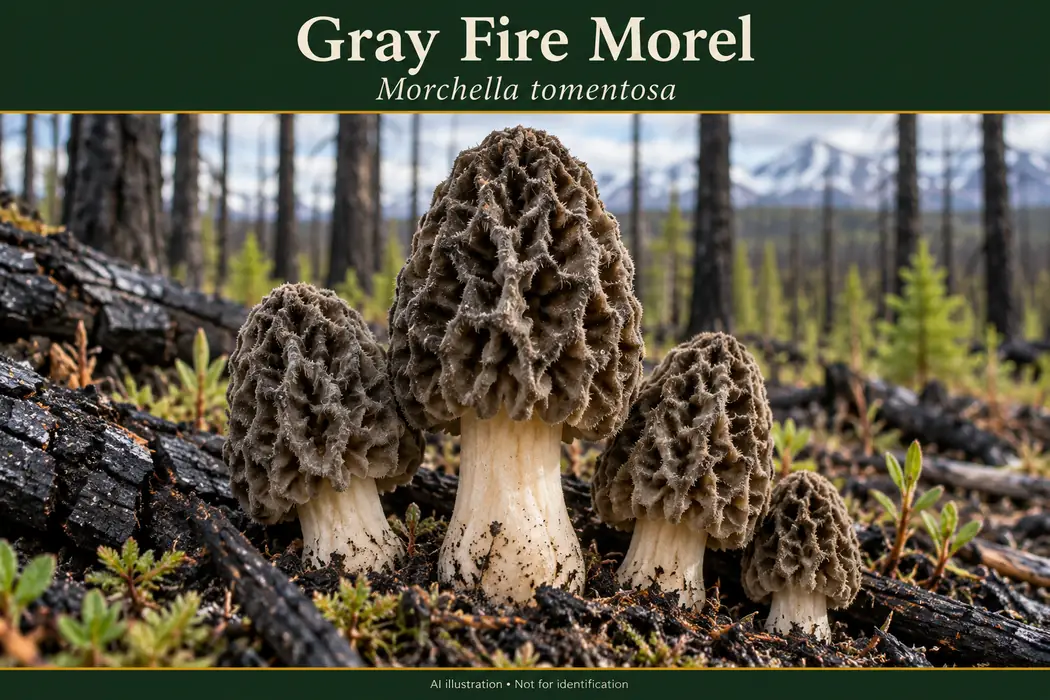
- Habitat: Burned forest soils.
- Season: Generally early summer, varying with local conditions.
- Culinary use: Thoroughly cooked sauces, soups and sautéed dishes.
- Important caution: Distinguish true morels from false morels and other superficially similar fungi.
2. Other Black Morels
Scientific group: Black morels within Morchella
“Black morel” describes several related mushrooms rather than one universally identifiable species. Some occur after fire, while others fruit in unburned forests. Their pitted caps make them distinctive, but identifying a specimen requires more than recognising a honeycomb-like surface.
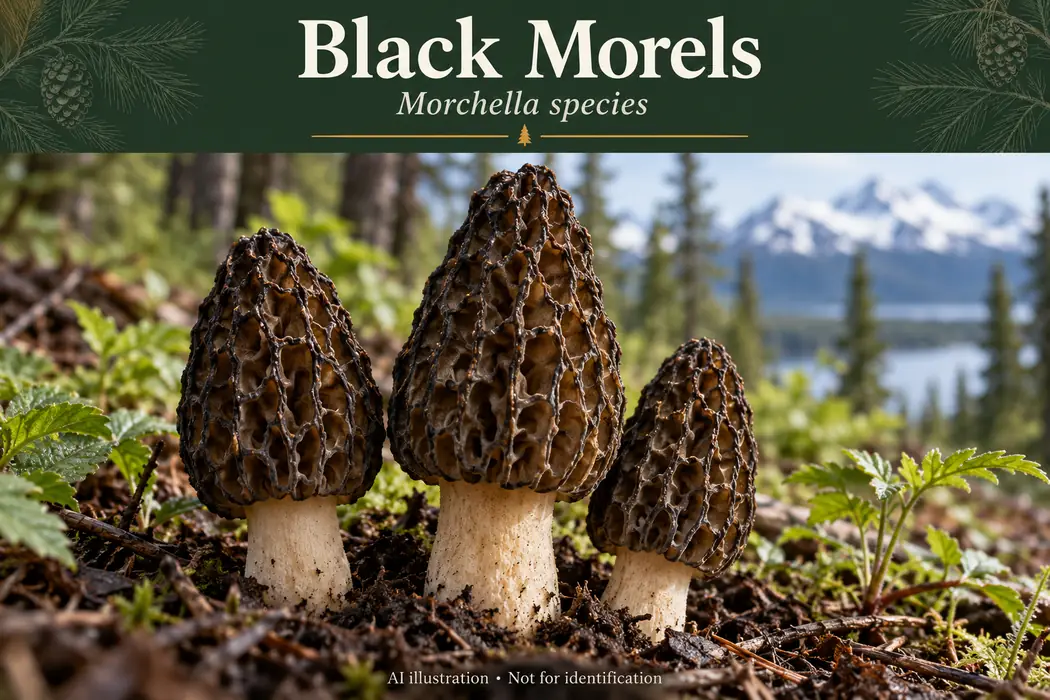
- Habitat: Forest soils, including certain burned areas.
- Season: Late spring and early summer.
- Culinary use: Cooked fresh or dried for later cooking.
- Important caution: Never eat morels raw or use tasting to identify an unknown mushroom.
3. King Bolete
Scientific group: Boletus edulis group
King boletes, also known as porcini, are prized for their substantial texture and savoury flavour. Beneath the cap is a layer of small pores rather than gills. Fresh, firm specimens are usually more desirable than older mushrooms with softened flesh or extensive insect damage.
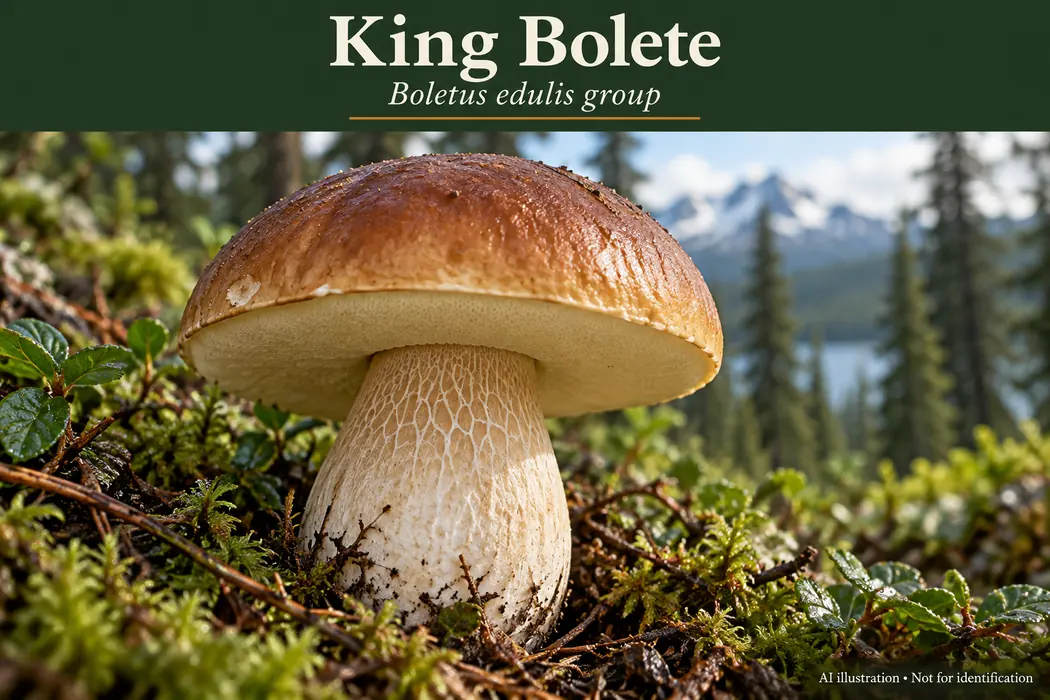
- Habitat: Forest ground near compatible living trees.
- Season: Summer into early autumn.
- Culinary use: Risotto, soups, sauces and drying.
- Important caution: Not every mushroom with a brown cap and pores is edible.
4. Admirable Bolete
Scientific name: Aureoboletus mirabilis
The admirable bolete is associated with moist western conifer forests, often appearing on heavily decayed wood. Older books may list it under Boletus or Boletellus. Its habitat makes it particularly relevant to the coastal forest component of Alaska’s mushroom diversity.
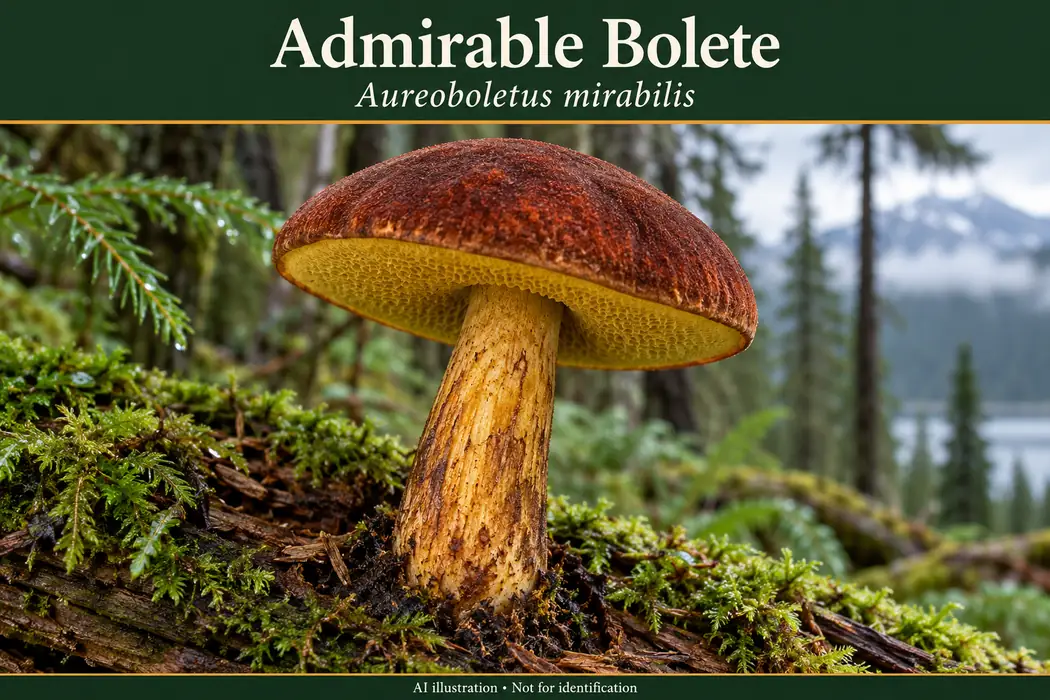
- Habitat: Decaying conifer wood, especially in hemlock forests.
- Season: Summer and autumn.
- Culinary use: Sautéed dishes and sauces.
- Important caution: Growing from wood is a useful clue, not a complete identification.
5. Pacific Golden Chanterelle
Scientific name: Cantharellus formosus
Pacific golden chanterelles are associated with southern coastal forests. Their undersides have blunt, branching folds rather than thin, blade-like true gills. Their firm texture makes them useful in dishes where the mushrooms should retain their shape.
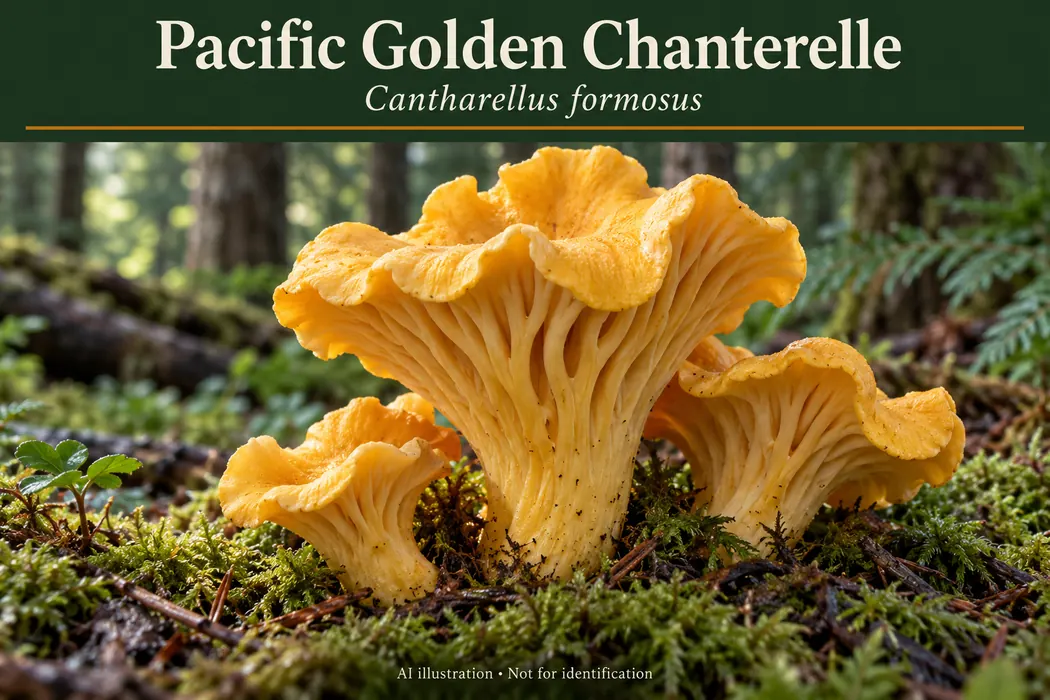
- Habitat: Moist conifer forests.
- Season: Usually late summer and autumn.
- Culinary use: Pasta, sautéed vegetables and cream sauces.
- Important caution: Orange colour alone does not distinguish a chanterelle from its lookalikes.
6. Yellowfoot Chanterelle
Scientific group: Craterellus tubaeformis group
Yellowfeet are smaller and more delicate than golden chanterelles. They commonly have brownish caps, yellowish stems and wrinkled undersides. Their muted colours allow them to blend into moss and damp forest litter.
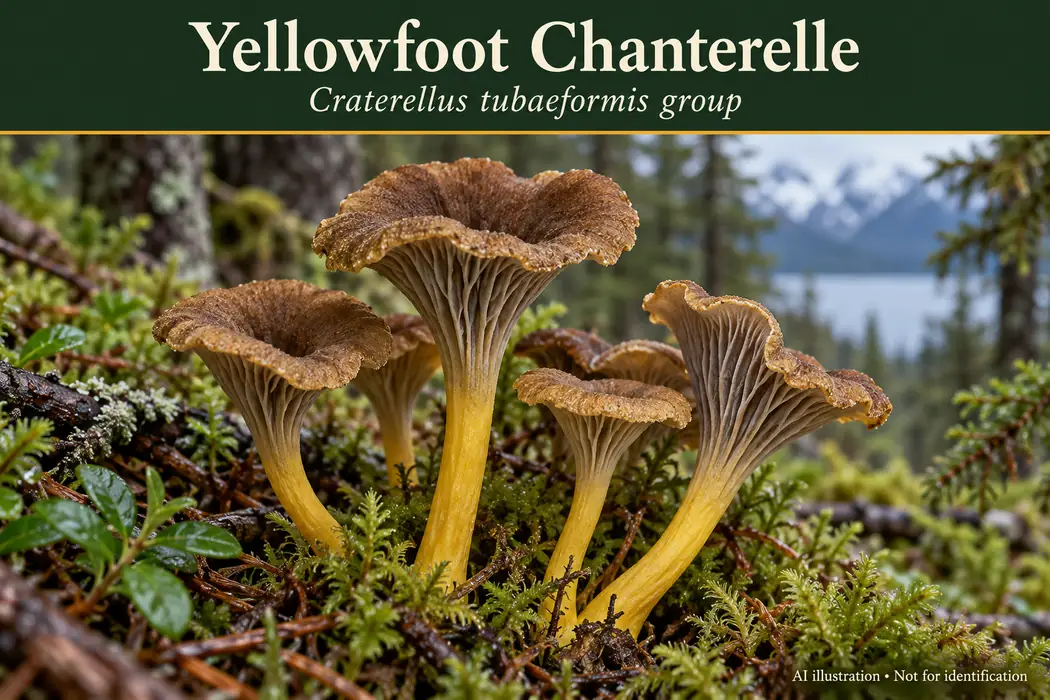
- Habitat: Moist, mossy conifer woodland.
- Season: Late summer and autumn.
- Culinary use: Soups, mixed mushroom dishes and drying.
- Important caution: Inspect each mushroom individually when gathering clusters or patches.
7. Blue Chanterelle
Scientific group: Polyozellus multiplex complex
Blue chanterelles form striking clusters of blue-purple to nearly black fruiting bodies. They are different from the black trumpet mushrooms often featured in guides to other regions. Their unusual appearance makes them interesting to observe, but does not eliminate the need for identification.
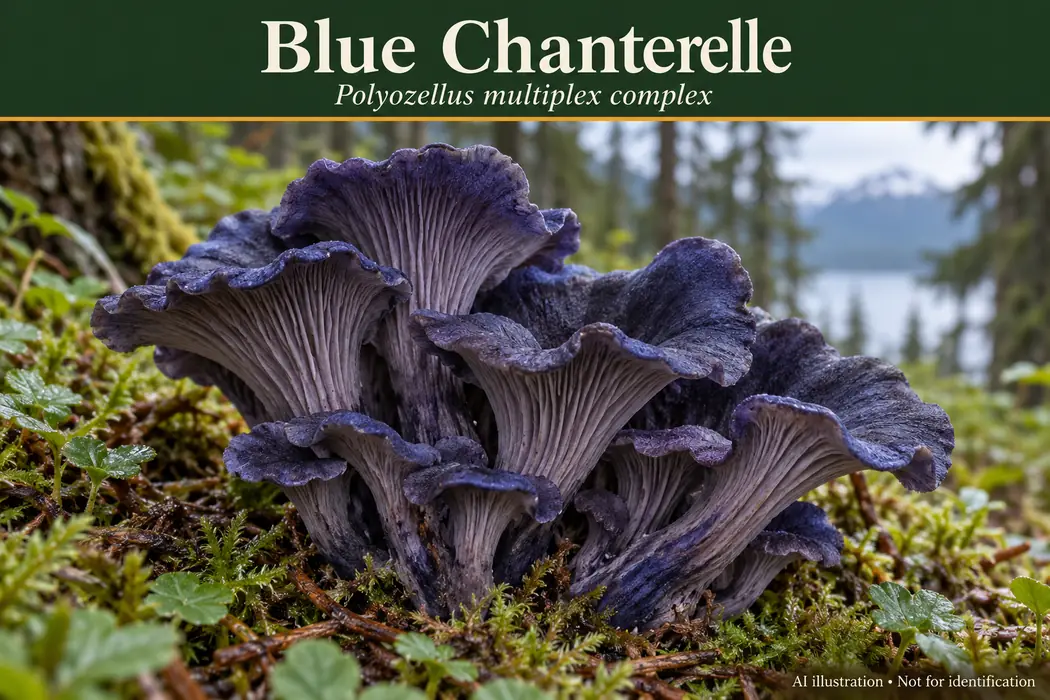
- Habitat: Conifer forests.
- Season: Summer and autumn.
- Culinary use: Cooked dishes that accommodate their dark colour.
- Important caution: Leave scarce local collections undisturbed rather than treating every edible find as a harvest opportunity.
8. Hedgehog Mushroom
Scientific group: Hydnum species
Hedgehog mushrooms have small teeth hanging beneath their caps. This feature is useful when learning their structure, although other fungi also produce teeth. Their firm flesh and relatively mild flavour make confirmed edible Hydnum popular with foragers.
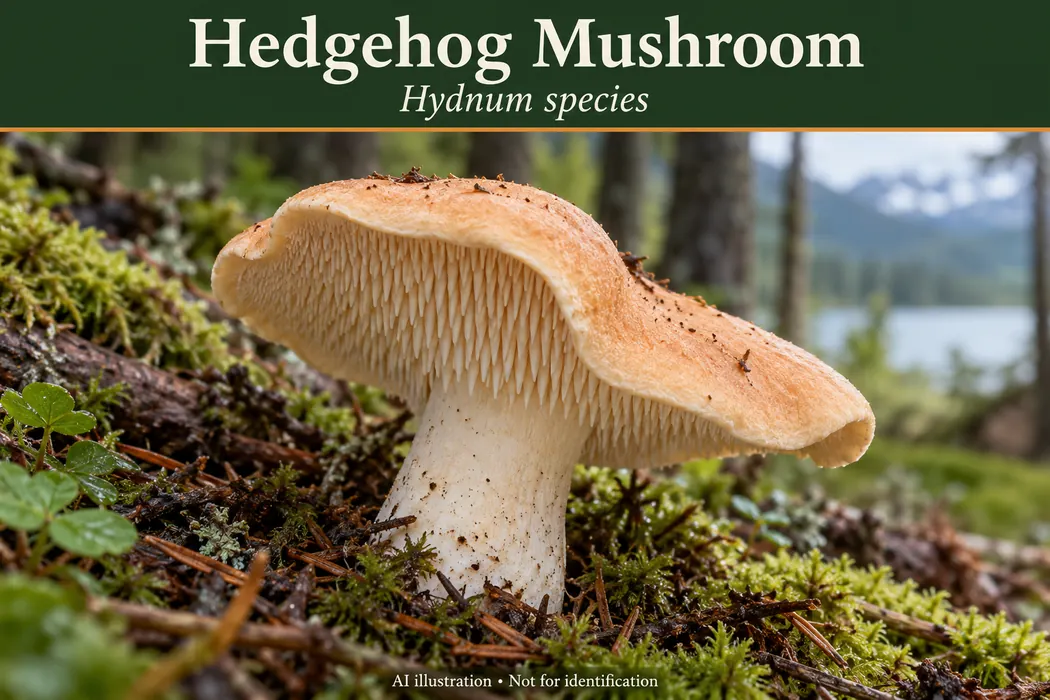
- Habitat: Forest ground, often among moss and leaf litter.
- Season: Summer and autumn.
- Culinary use: Roasting, sautéing and soups.
- Important caution: Teeth beneath a cap do not automatically establish edibility.
9. Bear’s Head Mushroom
Scientific name: Hericium abietis
Bear’s head produces a branched, pale fruiting body covered with hanging spines. It grows on conifer wood and is related to cultivated lion’s mane. However, the familiar supermarket lion’s mane and Alaska’s bear’s head should not be presented as the same species.
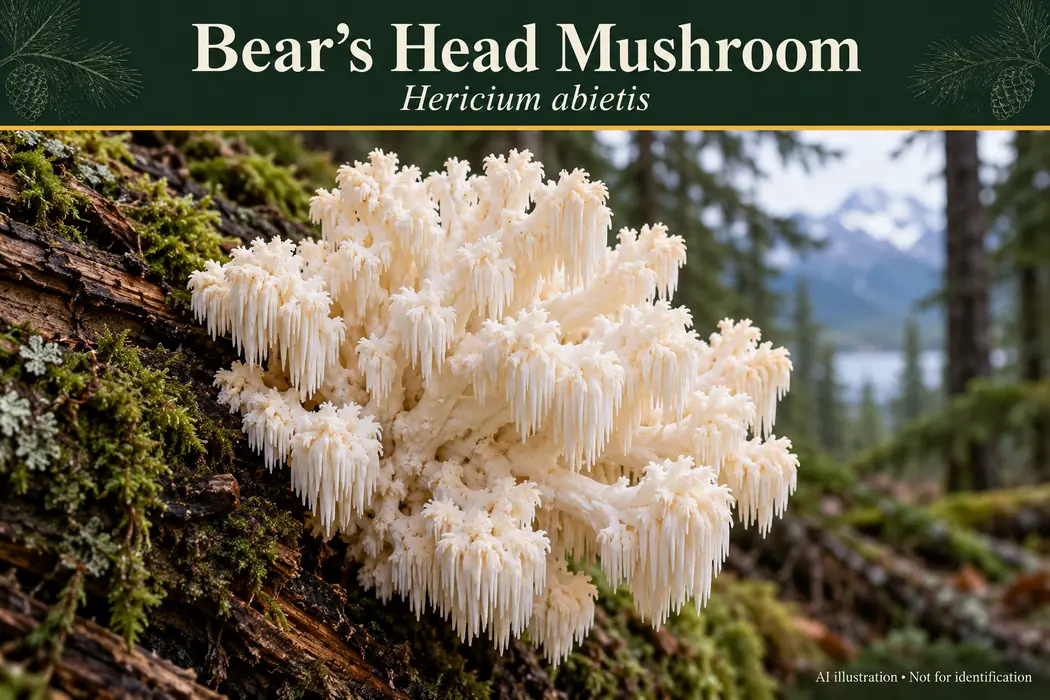
- Habitat: Dead or decaying conifer trunks and logs.
- Season: Summer and autumn.
- Culinary use: Sautéed pieces, soups and mushroom cakes.
- Important caution: Avoid deteriorating specimens, even when their species is known.
10. Comb Tooth Mushroom
Scientific name: Hericium coralloides
Comb tooth has a delicate branching structure with small hanging teeth. Unlike conifer-associated bear’s head, it grows on hardwood. Its numerous branches can hold bark fragments and other debris, so confirmed specimens need careful cleaning before cooking.
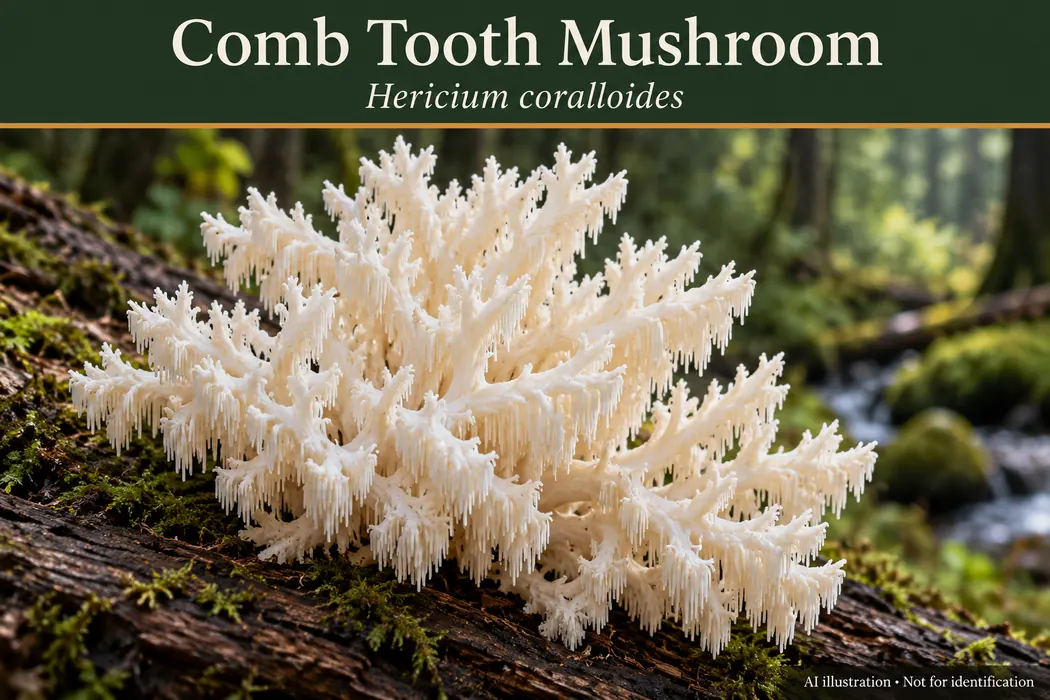
- Habitat: Dead hardwood.
- Season: Summer and autumn.
- Culinary use: Sautéed dishes and soups.
- Important caution: Its edibility does not extend to all coral-shaped mushrooms.
11. Oyster Mushrooms
Scientific group: Pleurotus species
Oyster mushrooms commonly form overlapping, fan-shaped caps on wood. Their gills descend toward the stem or attachment point. The host tree, flesh, underside and overall growth pattern all matter when separating them from other pale wood-growing fungi.
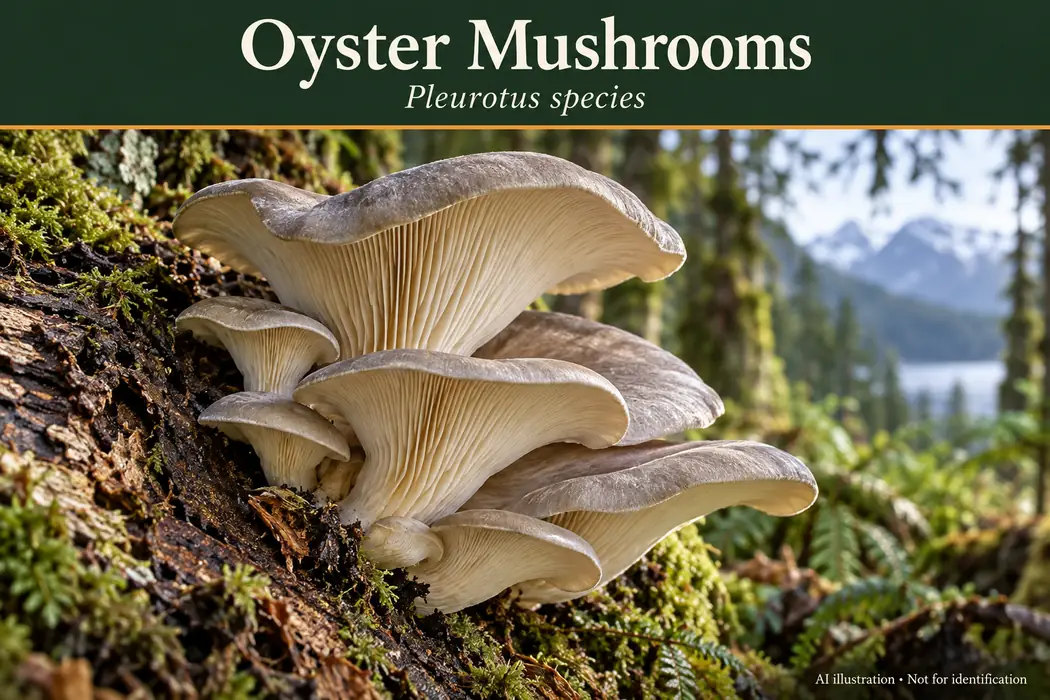
- Habitat: Dead or weakened hardwood and fallen logs.
- Season: Varies by species and weather.
- Culinary use: Stir-fries, soups and roasted mushroom dishes.
- Important caution: Do not confuse oyster mushrooms with angel’s wings.
12. Shaggy Mane
Scientific name: Coprinus comatus
Shaggy manes begin with elongated, pale caps covered in prominent scales. As they mature, the caps darken and dissolve into an ink-like liquid. Their short period of good culinary condition means they require prompt processing after identification.
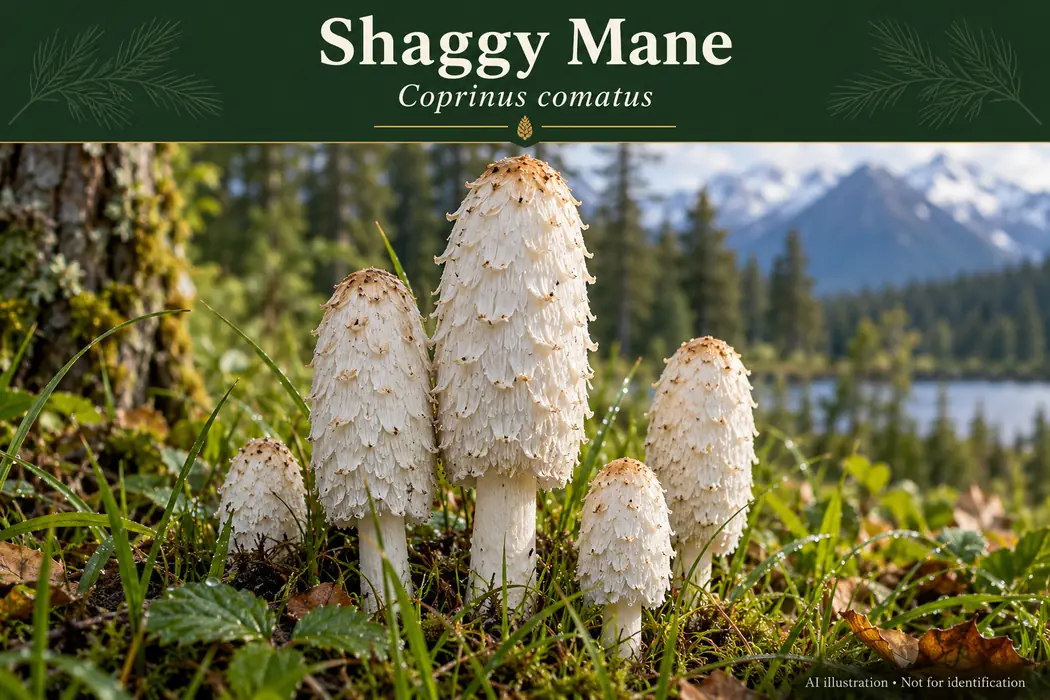
- Habitat: Grassy areas and disturbed ground.
- Season: Summer and autumn.
- Culinary use: Young specimens cooked soon after collecting.
- Important caution: Avoid contaminated sites, including heavily trafficked roadsides.
13. Common Puffball
Scientific name: Lycoperdon perlatum
Common puffballs are small, rounded fungi that often carry tiny surface spines. Their interiors change as they mature and begin producing spores. External colour is insufficient for deciding whether a specimen is a young edible puffball.
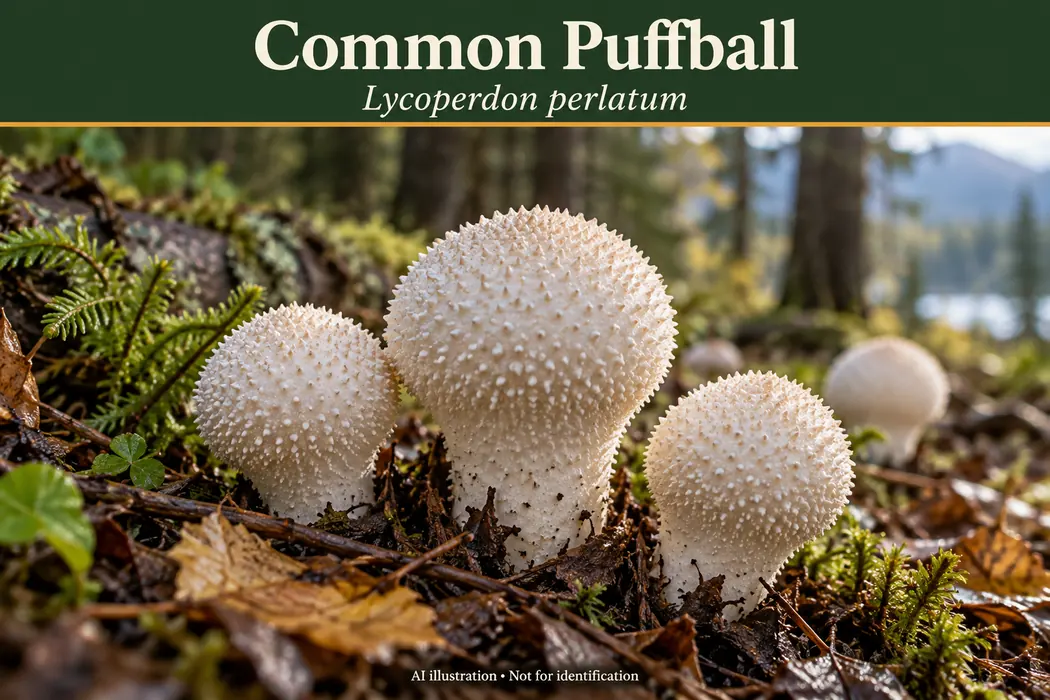
- Habitat: Woodland soil and forest litter.
- Season: Summer and autumn.
- Culinary use: Confirmed young specimens cooked in mixed dishes.
- Important caution: Cut every specimen lengthwise; visible developing gills, a cap or an internal stem rule out a puffball.
14. Larger Meadow Puffballs
Scientific group: Edible Calvatia species
Larger puffballs occur in open habitats in Alaska. They should not all be labelled “giant puffballs,” because several species and common names are involved. Their mild flesh can take on the flavour of seasonings and accompanying ingredients.
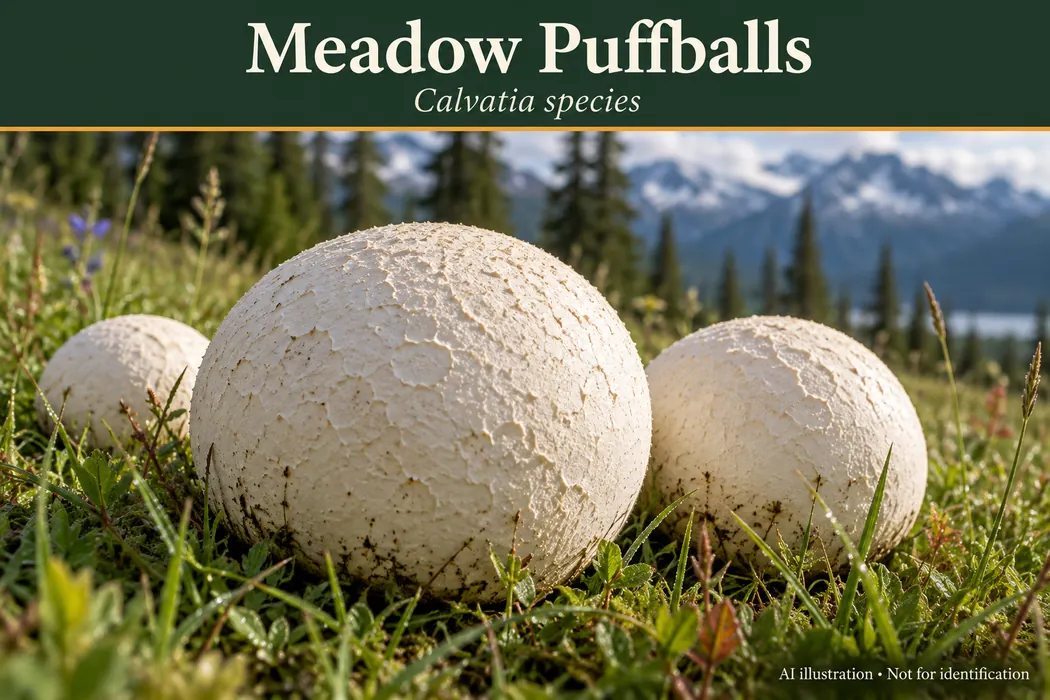
- Habitat: Meadows, grassy openings and similar ground.
- Season: Summer into early autumn.
- Culinary use: Sliced and cooked after identification.
- Important caution: A firm, uniformly white interior is necessary for edible-stage specimens, but is not a complete species identification.
15. Slippery Jack
Scientific name: Suillus luteus
Slippery jack is a pine-associated bolete known for its sticky cap. Its texture is softer than that of king bolete, and opinions differ on its culinary appeal. Nearby host trees provide useful context when assessing whether an identification is plausible.
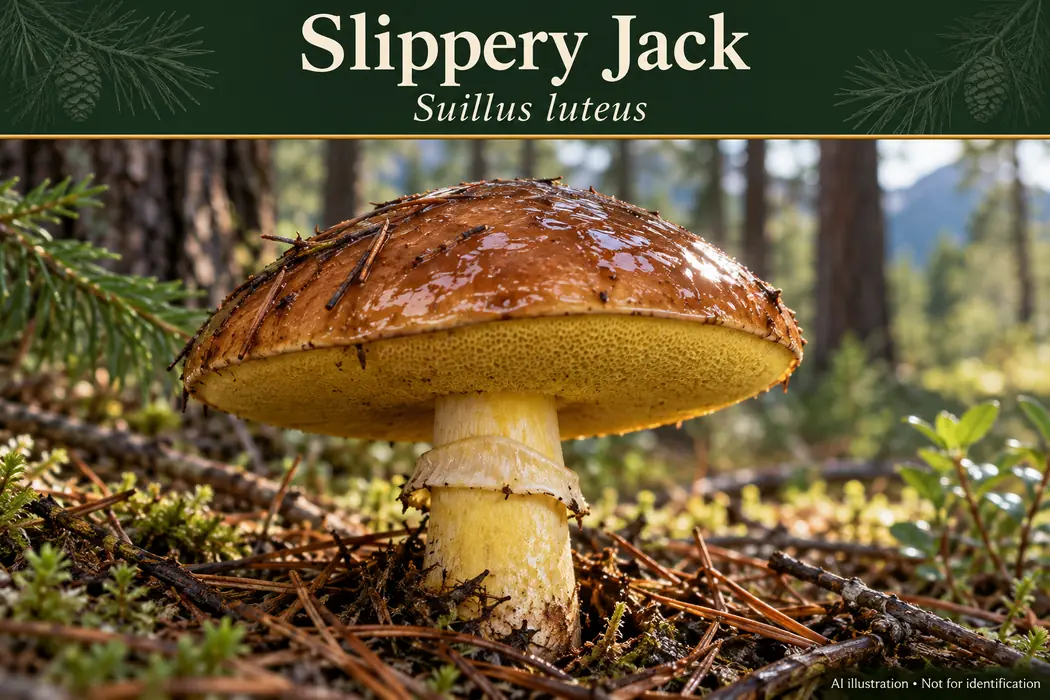
- Habitat: Near pines.
- Season: Summer and autumn.
- Culinary use: Cooked mixtures, soups and dried mushroom powder.
- Important caution: Some people experience digestive upset; do not generalise its edibility to all Suillus.
16. Shrimp Russula
Scientific group: Russula xerampelina group
Shrimp russulas can develop a shellfish-like smell, particularly with age. Their cap colours vary, making colour-based identification unreliable. They belong to a large group of brittle-fleshed mushrooms that requires careful examination and experience.
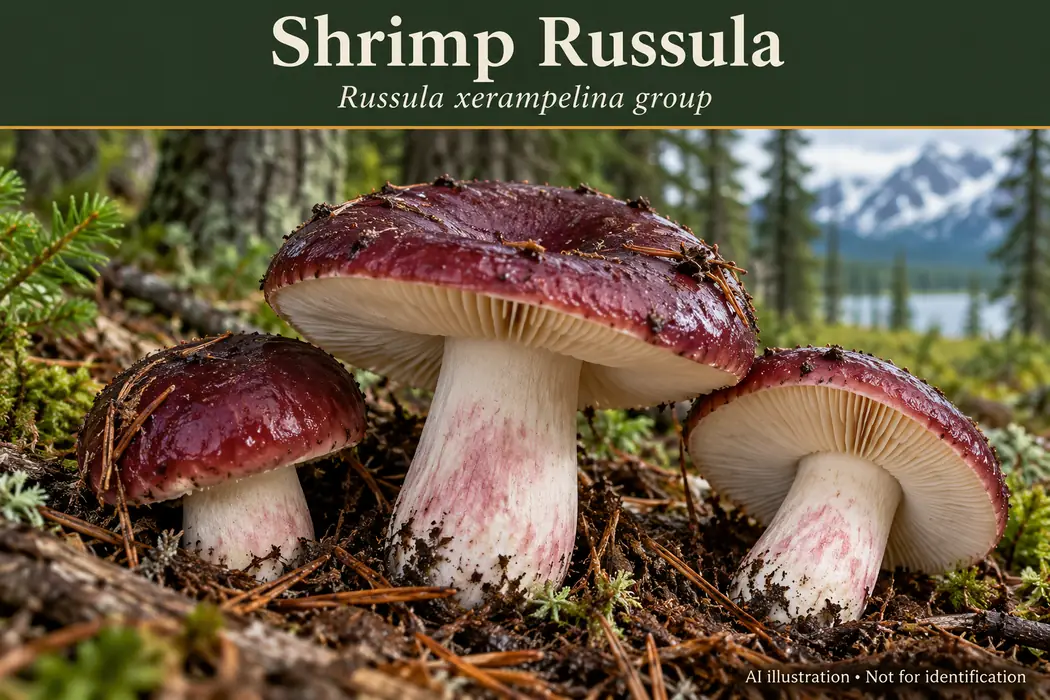
- Habitat: Forests with suitable host trees.
- Season: Summer and autumn.
- Culinary use: Thoroughly cooked savoury dishes.
- Important caution: A seafood-like odour does not independently confirm identity.
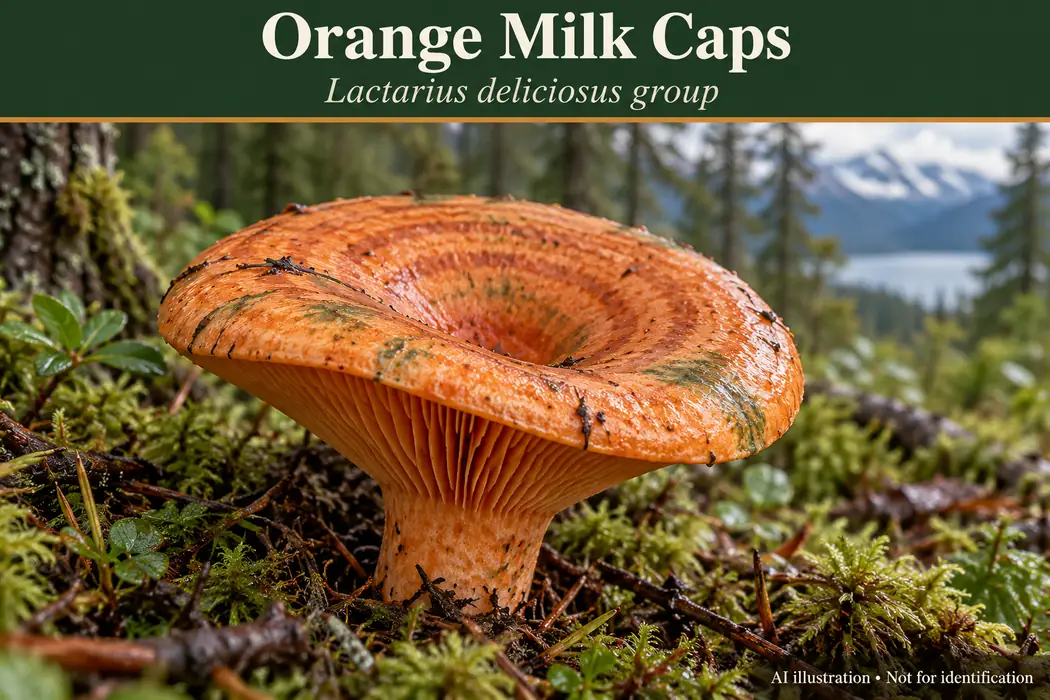
17. Orange Milk Caps
Scientific group: Lactarius deliciosus group
These milk caps can release orange latex when damaged, and some develop greenish staining. Regional species names and culinary quality vary. Older guidebooks may apply broad European names to North American mushrooms that need more precise local identification.
- Habitat: Conifer forests.
- Season: Summer and autumn.
- Culinary use: Sautéed or roasted after confirmation.
- Important caution: Many other milk caps are unsuitable for eating.
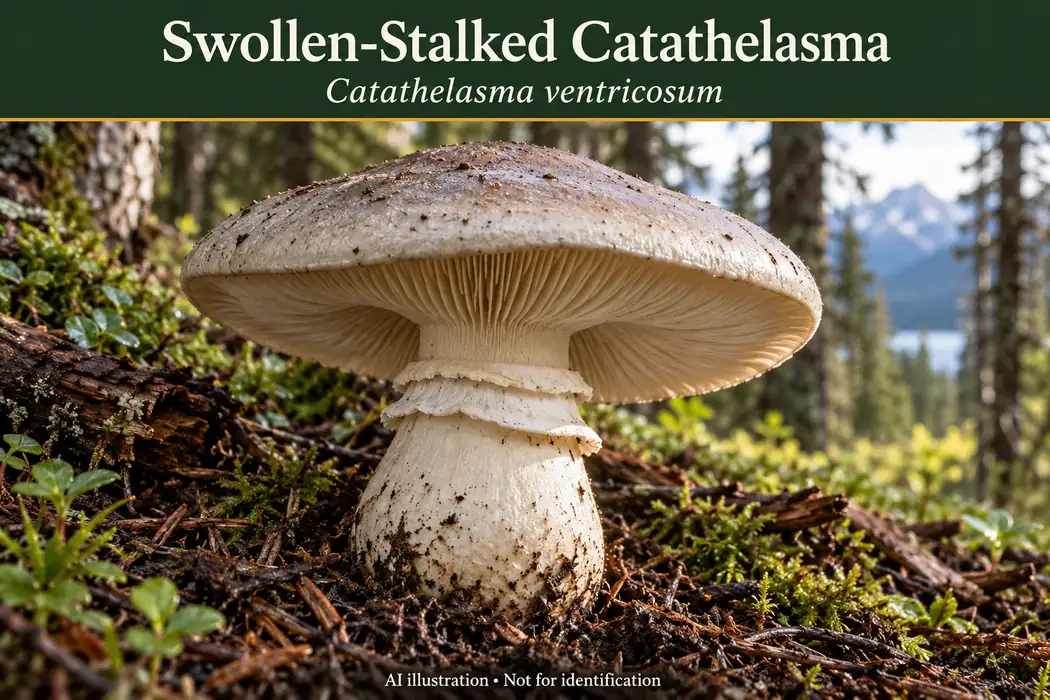
18. Swollen-Stalked Catathelasma
Scientific name: Catathelasma ventricosum, as used in regional guides
This substantial mushroom has dense flesh and a stout stem. Related western Catathelasma can be difficult to separate, and historical names are not always straightforward. It belongs in an advanced learning section rather than a beginner’s collecting shortlist.
- Habitat: Conifer forest ground.
- Season: Late summer and autumn.
- Culinary use: Firm-textured cooked dishes.
- Important caution: Large size, pale gills and a stem ring do not establish safety.
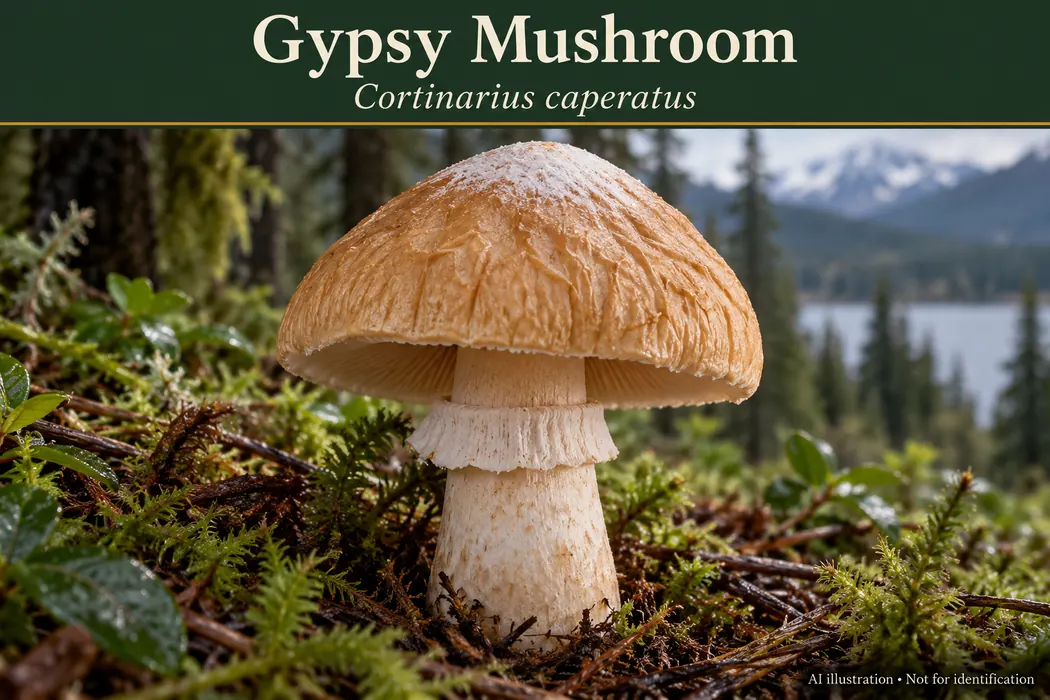
19. Gypsy Mushroom
Scientific name: Cortinarius caperatus
Also called the wrinkled cort, this species has recognised edible use. However, some other webcaps cause severe poisoning, making casual identification especially inappropriate. Its inclusion explains Alaska’s edible diversity without recommending unfamiliar webcaps for the table.
- Habitat: Forest ground.
- Season: Late summer and autumn.
- Culinary use: Cooked only after reliable species-level identification.
- Important caution: Do not use the presence of a ring as a safety test.
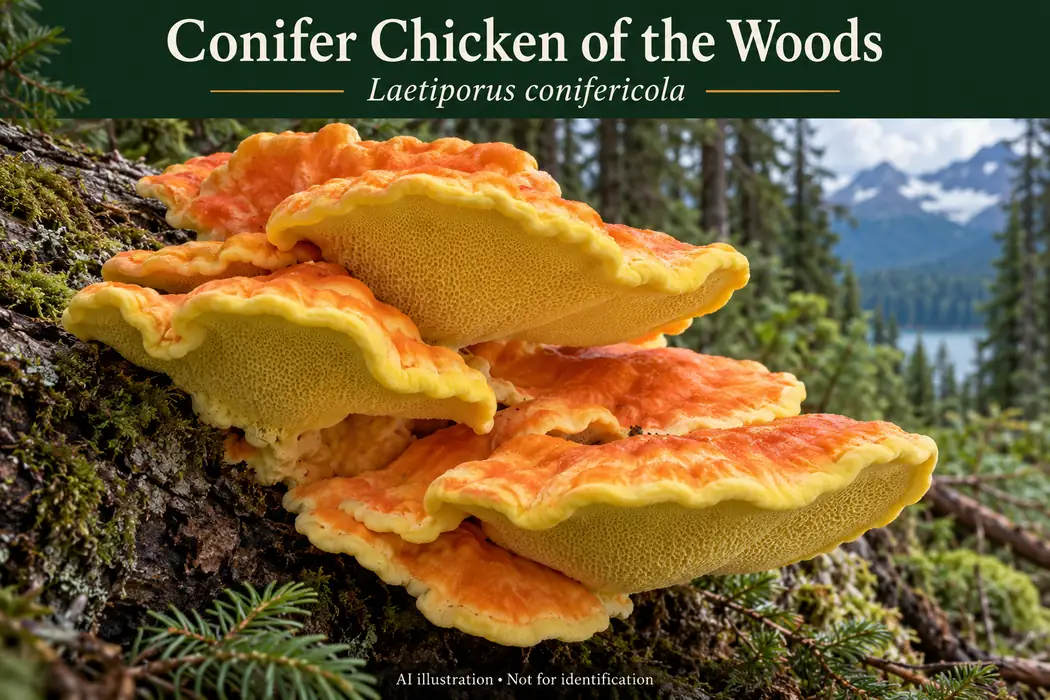
20. Conifer Chicken of the Woods
Scientific name: Laetiporus conifericola
Conifer chicken of the woods forms conspicuous orange shelves on conifer wood. Some experienced foragers eat it, but gastrointestinal reactions make its edible status qualified. Advice about eastern, hardwood-growing chicken mushrooms should not automatically be applied to this species.
- Habitat: Conifer trunks, stumps and logs.
- Season: Summer and autumn.
- Culinary use: Tender, confirmed specimens, thoroughly cooked.
- Important caution: Cooking does not guarantee individual tolerance.
Where to Look for Edible Mushrooms in Alaska?
Southeast Alaska’s Coastal Forests
Moist spruce-hemlock forests provide habitat for chanterelles, yellowfeet, hedgehogs and wood-growing tooth fungi. Look at the forest structure: mossy ground, mature trees and decaying logs support different fungal communities.
A suitable habitat increases the possibility of finding a species. It does not confirm the identity of anything growing there.
Southcentral Alaska’s Mixed Forests
Southcentral Alaska includes varied forest environments. Learning to distinguish spruce, birch and cottonwood helps make mushroom observations more meaningful. Record whether a mushroom grows directly from wood, from buried wood or from soil.
Interior Alaska’s Forests and Burns
Interior mushroom hunting often involves birch, aspen and spruce forests. Burned areas can produce fire-associated morels, but productivity varies between sites and years.
A recent burn also presents hazards such as unstable trees and difficult footing. Safe access matters as much as mushroom abundance.
Poisonous and Problematic Mushrooms to Avoid
Some mushrooms appear in older edible guides despite later concerns or significant identification risks.
| Mushroom or group | Why it needs exclusion or particular caution |
|---|---|
| False morels, including Gyromitra | Some contain dangerous toxins; they are not substitutes for true morels |
| Angel’s wings | Historical edible descriptions should not be treated as current food advice |
| Alaskan gold, Phaeolepiota aurea | Safety concerns make it unsuitable for a recommended edible list |
| Unidentified webcaps | Some species cause severe poisoning |
| Funeral bell, Galerina marginata group | Dangerous wood-growing mushrooms that can be overlooked among other collections |
| Unidentified white or button-stage mushrooms | Colour and immature shape can conceal important identification features |
Cooking, drying, peeling or freezing cannot be relied upon to make poisonous mushrooms safe.
How to Learn Mushroom Identification?
Begin with complete specimens and habitat notes. A cap photograph alone may hide the characteristics needed to separate similar species.
Useful observations include:
- The mushroom’s growing surface: soil, wood, moss or litter.
- Nearby trees.
- Gills, pores, teeth or folds beneath the cap.
- The complete stem and its base.
- Rings, veils and other structures.
- Changes after handling or cutting.
- The appearance of several specimens at different growth stages.
Spore prints can contribute evidence, but they are not standalone edibility tests. Mushroom Identification apps and AI-generated images should never be used to approve mushrooms for eating.
Harvesting and Preparing Mushrooms
Collect only confirmed edible species in good condition from uncontaminated places. Keep different collections separate and avoid crushing delicate mushrooms during transport.
After collecting:
- Refrigerate promptly and process soon.
- Remove debris and inspect for deterioration.
- Cook wild edible mushrooms thoroughly.
- Try a small cooked portion when eating a confirmed species for the first time.
- Never use a small taste as a test of an unknown mushroom’s safety.
Drying suits some species better than others. Morels and boletes are commonly dried, while delicate mushrooms may be better cooked and frozen. Do not improvise home-canning methods for wild mushrooms.
Foraging Responsibly in Alaska
Check the rules for the exact place you intend to visit. National forests, parks, refuges, state land, private property and Alaska Native corporation lands can have different access and collection requirements.
Personal collection and commercial harvesting may also be regulated differently.
During an outing:
- Avoid raking or damaging the forest floor.
- Leave deteriorating specimens and avoid unnecessary collection.
- Carry navigation equipment and suitable weather protection.
- Tell someone your route and expected return time.
- Follow local wildlife guidance.
- Do not assume mobile reception will be available.
Frequently Asked Questions
What are the most familiar edible mushrooms in Alaska?
Morels, king boletes, golden chanterelles, hedgehogs, oyster mushrooms and shaggy manes are familiar examples. Their abundance differs between regions.
What month is best for mushroom hunting in Alaska?
There is no single best month statewide. Interior morels often appear in June and July, while many other mushrooms fruit during late summer and autumn.
Do edible mushrooms grow near Anchorage?
Yes, suitable habitats in Southcentral Alaska support edible species. However, access rules, contamination, local conditions and reliable identification must all be considered.
Are all puffballs edible?
No blanket rule is safe. A suspected puffball must be identified and examined internally. Immature gilled mushrooms can resemble puffballs, and mature puffballs are unsuitable for eating.
Are all mushrooms with pores edible?
No. Pores describe the underside structure, not food safety. Boletes require identification just like gilled mushrooms.
Is bear’s head the same as lion’s mane?
No. Alaska’s bear’s head, Hericium abietis, is related to cultivated lion’s mane, usually Hericium erinaceus, but they are different species.
Can pictures confirm that a mushroom is edible?
No. Pictures may omit important structures, habitat information and other characteristics. Use them for learning alongside regional references and experienced local guidance.
Are edible mushrooms decomposers?
Some are. Oyster mushrooms and tooth fungi break down wood, while chanterelles and many boletes form partnerships with living trees. Both relationships contribute to Alaska’s forest ecosystems.
Sign in to leave a comment and join the discussion.
 Species Guide
Wisconsin is home to edible mushrooms such as morels, chanterelles, oyster mushrooms, hen of the woods, chicken of the woods and giant puffballs. Different...
 Species Guide
Is a Mushroom a Decomposer? Yes, many mushroom-forming fungi are decomposers. They break down dead wood, fallen leaves and other organic material, helping...
 Species Guide
If you're looking for edible mushrooms in Iowa, you'll find a surprising variety of delicious wild fungi growing in forests, river valleys, woodlands, and...