White Mushrooms in Texas Yards: Identification Chart
— views
The big white mushroom in a Texas yard after rain is most often the green-spored parasol (Chlorophyllum molybdites), a poisonous lawn species that Texas A&M AgriLife describes as one of the most consumed poisonous mushrooms in the United States. Other white mushrooms in Texas lawns include the Thiers amanita, puffballs, shaggy mane and, near trees, the deadly destroying angel. Treat every white yard mushroom as unidentified until a qualified person checks it.
This page sorts the white mushrooms Texans photograph in lawns, mulch and flower beds. It gives three quick checks, the dangerous look-alikes side by side, a section on yellow lawn mushrooms, and the steps to take for dogs and children.
Key Takeaways
- The green-spored parasol has 2,688 research-grade Texas records on iNaturalist, more than any other white lawn mushroom. Records run from April to October and peak in September.
- Three checks sort most white lawn mushrooms: flip it for gill color, print it for spore color, and dig it for a sac at the base.
- The Thiers amanita was first collected on a College Station lawn in September 1952. It now ranges north to Wisconsin and east to Maryland.
- The destroying angel is the deadly one. It has 60 Texas records, and its young button looks like a small puffball.
- Texas A&M AgriLife advises leaving lawn mushrooms alone unless children or pets show interest. Picking them does not stop new ones.
- If a person eats a yard mushroom, call the Texas Poison Center Network at 1-800-222-1222. If a pet does, call a veterinarian at once.
White Mushrooms in Texas Yards: Identification Chart
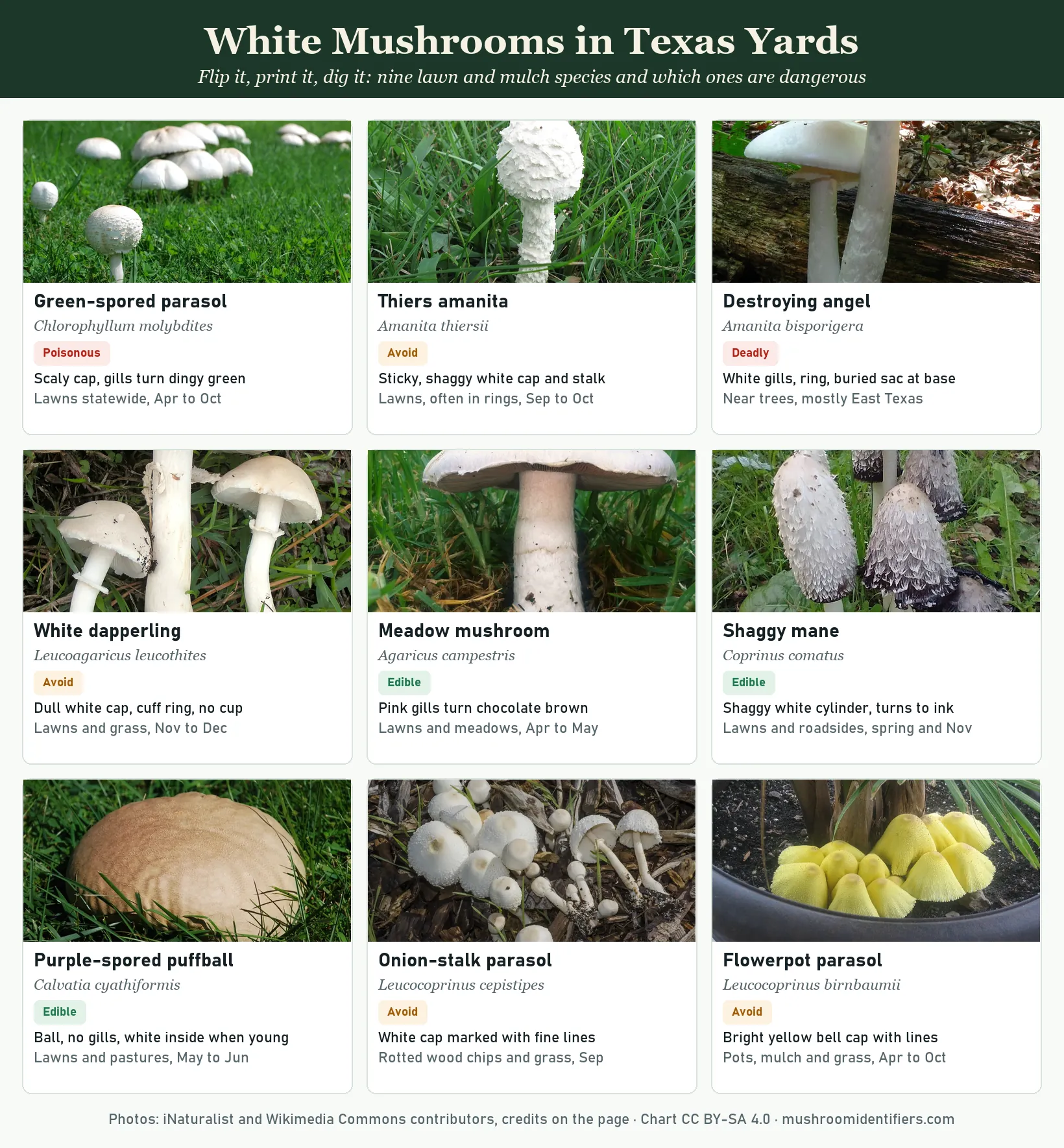
Nine species cover most white and yellow mushrooms photographed in Texas yards. Counts and months come from our tally of research-grade Texas fungi records on iNaturalist, pulled on November 20, 2026. A record shows where people photograph a mushroom. It says nothing about whether a yard find is harmless.
| Mushroom | Key features | Where and when in Texas | Risk |
|---|---|---|---|
| Green-spored parasol (Chlorophyllum molybdites) | Parasol up to 12 inches across. Cream or tan scales, large ring. Gills white, then dingy green. Green spore print. | Lawns statewide, often in rings. April to October, peak in September. | Poisonous. Violent vomiting and diarrhea. |
| Thiers amanita (Amanita thiersii) | Cap 2¾ to 5½ inches. Cap and stalk white, sticky and shaggy. White spore print. | Lawns, often in fairy rings. Peak in September and October. | Not edible. Edibility has not been established. |
| Destroying angel (Amanita bisporigera) | White gills, white spore print, a ring, and a saclike cup at the base that is often buried. | Ground near trees. Mostly East Texas, also the Houston area and North Texas. Peak in May and June. | Deadly. Amatoxin. |
| White dapperling (Leucoagaricus leucothites) | Dull white to cream cap, 3.5 to 10 cm. Cuff-like ring. No cup at the base. | Lawns and grass, mostly North and Central Texas. November and December. | Not recommended. Stomach upset reported. |
| Meadow mushroom (Agaricus campestris) | Cap 1 to 4 inches. Gills light pink, then chocolate to blackish brown. Blackish brown spore print. | Lawns and meadows, sometimes in rings. April and May. | Listed as edible with extreme caution. Easy to confuse with Amanitas. |
| Shaggy mane (Coprinus comatus) | White shaggy cylinder 4 to 6 inches tall. Cap turns black and inky. Black spore print. | Lawns, roadsides and wood chips. March to May, again in November. | Listed as edible when young. Needs confirmation. |
| Purple-spored puffball (Calvatia cyathiformis) | Ball with no cap and no gills. Pure white inside when young, dusty when old. | Lawns and pastures, mostly North Texas. May and June. | Edible only while pure white inside. Amanita buttons look similar. |
| Onion-stalk parasol (Leucocoprinus cepistipes) | White cap marked with fine lines. | Well-rotted wood chips and grass. Peak in September. | Avoid. No edibility data found. |
| Flowerpot parasol (Leucocoprinus birnbaumii) | Bright yellow, bell-shaped cap 2 to 5 cm with fine lines. Thin collar-like ring. | Potted plants, mulch and grass. April to October. | Possibly poisonous. Avoid. |
How Do You Identify a White Mushroom in a Texas Lawn?
Use three checks in order: flip it, print it, dig it. No single feature names a white mushroom, and color from above tells you almost nothing. The checks below draw on the Missouri Department of Conservation mushroom guide and the sources cited under each species.
| Check | What you see | What it points to |
|---|---|---|
| Flip it | Gills with a dingy green tint | Green-spored parasol |
| Gills pink, chocolate or blackish brown | Meadow mushroom or another Agaricus | |
| Gills white | Amanita, white dapperling or a young green-spored parasol. Go to the next check. | |
| Gills and cap edge melting into black ink | Shaggy mane | |
| No gills at all | Puffball. Slice it from top to bottom. | |
| Print it | Green spore print | Green-spored parasol |
| White spore print | Amanita or white dapperling. Treat as dangerous. | |
| Blackish brown spore print | Meadow mushroom group | |
| Black spore print | Shaggy mane | |
| Dig it | Saclike cup around the base | Amanita, possibly a destroying angel |
| Outline of a cap and stem inside a sliced white ball | Amanita button, not a puffball |
To make a print, the guide says to cut off the stem and set the cap gill-side down on paper that is half black and half white. Cover it with a bowl. A print shows in 1 to 12 hours. Our spore print guide has photos of each color.
These checks narrow a find. They do not clear it for eating. Young green-spored parasols have white gills, so a single young mushroom can fail the flip test.
Types of White Mushrooms in Texas Yards
Eight white species account for most Texas yard records, and each has one feature that sets it apart. The yellow flowerpot parasol has its own section further down.
Green-Spored Parasol
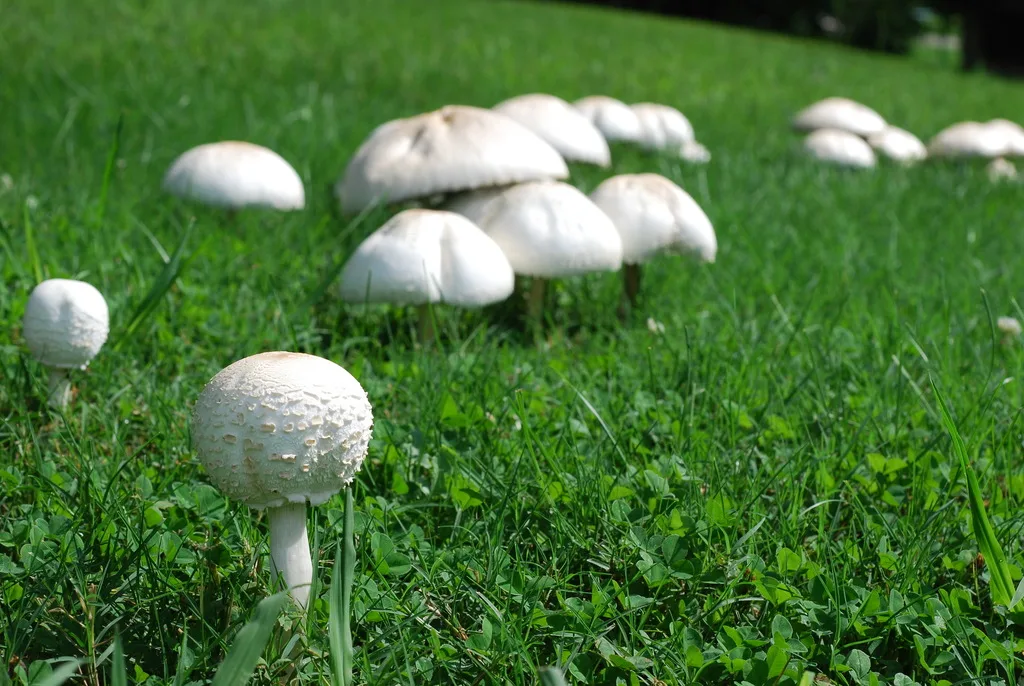
This is the answer to most "what are those white mushrooms in my yard" questions. In an AgriLife Today article, Texas A&M plant pathology professor Brian Shaw calls it the false parasol or "vomiter". He says people mistake it for puffballs and button mushrooms. The gills turn green as it matures.
Texas records peak in September, with 666 of 2,688. The Gulf Coast holds 905 records and North Texas holds 713. See our green-spored parasol guide for the full description.
Thiers Amanita
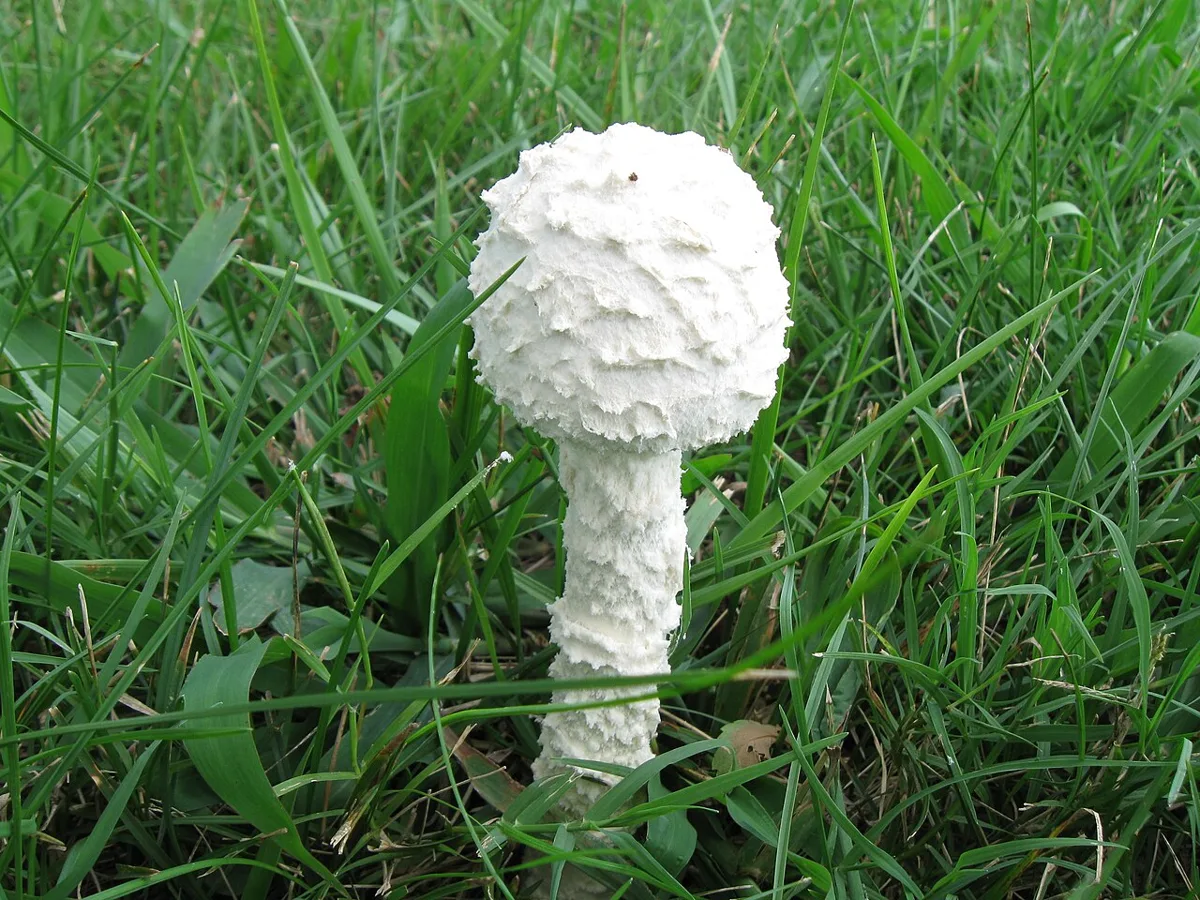
The Thiers amanita is a white lawn Amanita with a Texas history. It was first collected from a lawn in College Station in September 1952 and is named for Harry Thiers, who described it. A 2012 study in Mycologia found it in nine states north to Illinois. The study showed that it lives on dead plant material such as grass litter, not on tree roots. A 2023 follow-up extends the range to Wisconsin, Pennsylvania and Maryland and says the native range is still unknown.
The Missouri Department of Conservation describes a white, sticky, shaggy cap and stalk, a white spore print and growth in fairy rings. It lists the species as not edible. Texas has 64 records, and 41 fall in September and October. iNaturalist files it as Saproamanita thiersii.
Destroying Angel
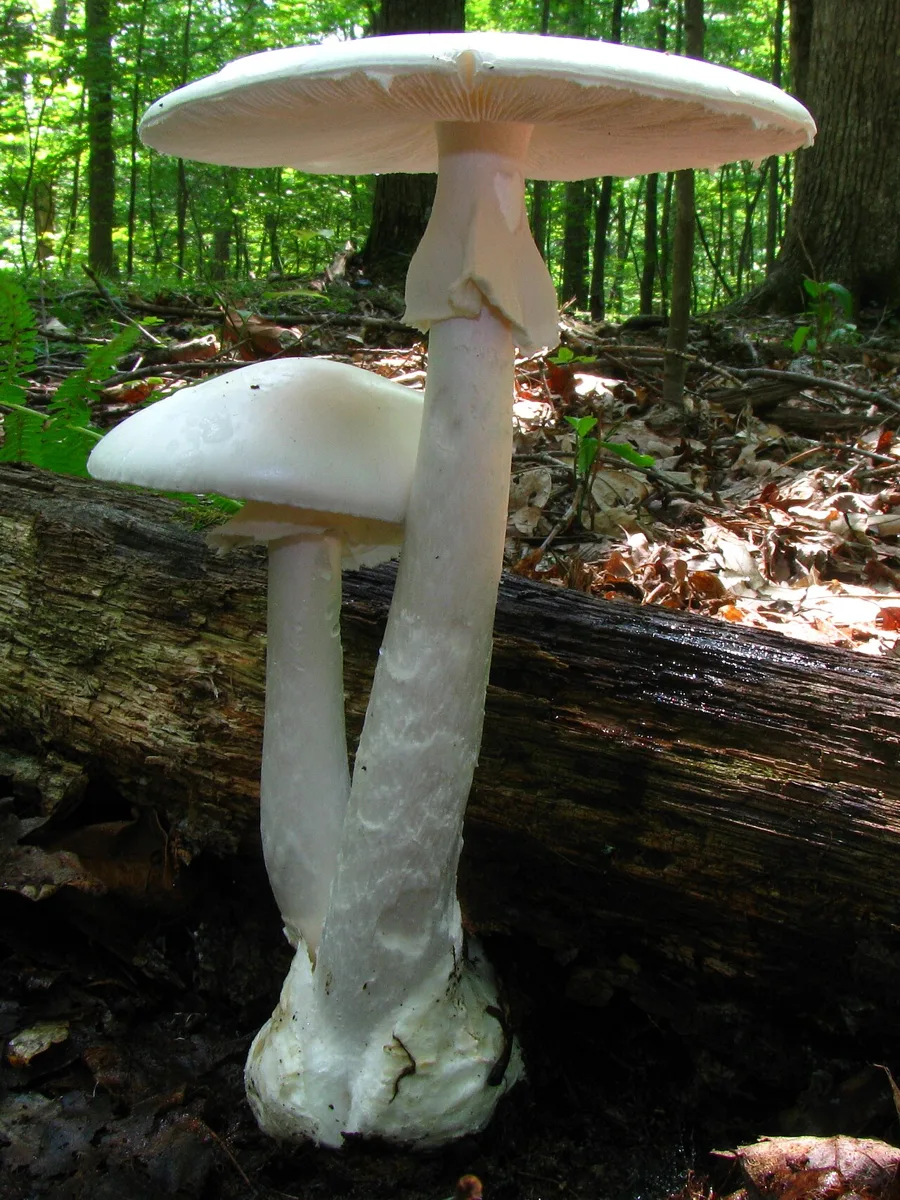
The destroying angel is the white mushroom that kills. The Missouri guide says one cap can kill a person. It has white gills, a white spore print, a ring that may be missing, and a saclike cup at the base that often sits below the soil. Most Amanitas partner with tree roots, so look hardest at white mushrooms under yard trees. Texas has 60 records, with 28 in East Texas and 11 in Harris County.
White Dapperling
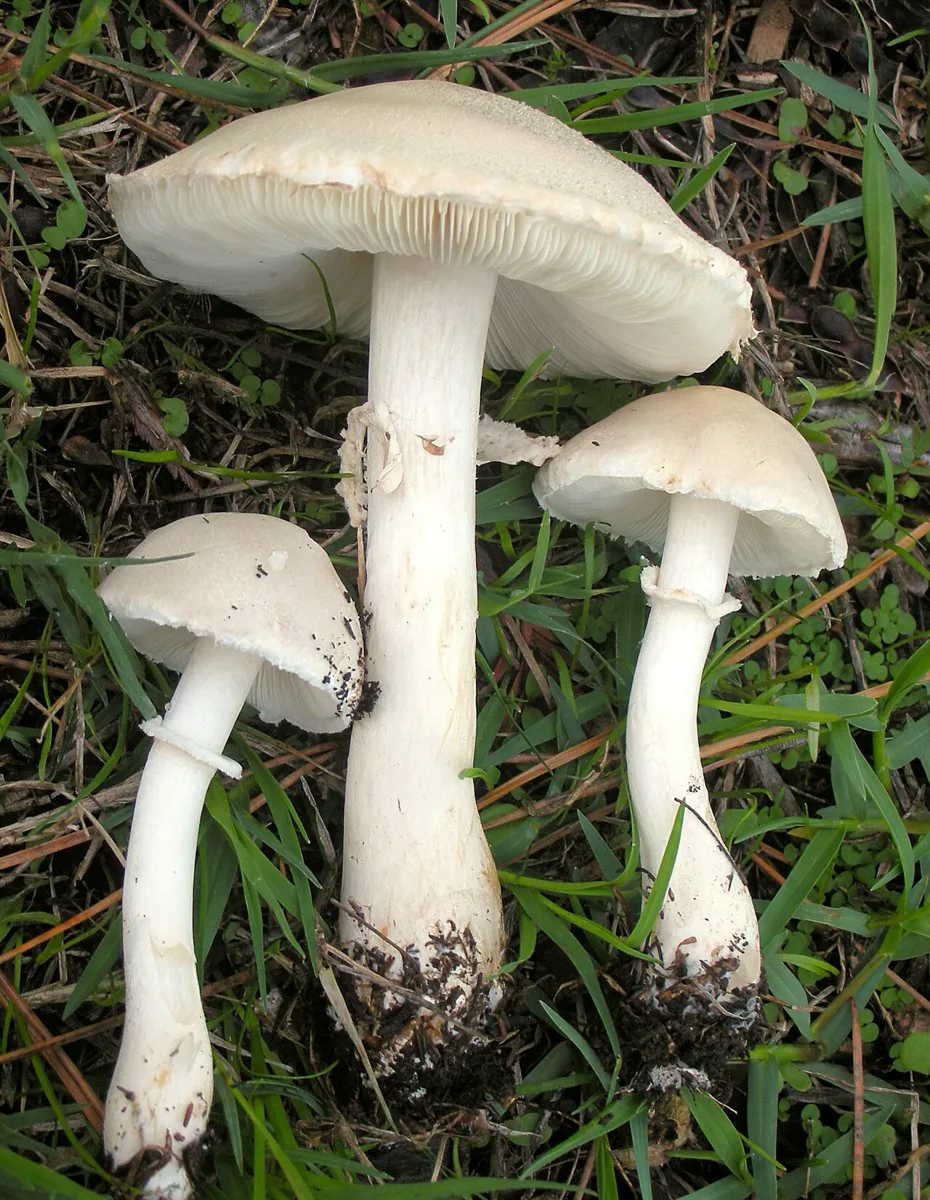
The white dapperling is a plain white lawn mushroom with a dull, dry cap. The University of British Columbia's Beaty Biodiversity Museum describes a young cap shaped like a motorcycle helmet, a cuff-like ring and no cup at the base. Its gills stay white or turn cream to pink, while Agaricus gills turn dark brown. The museum lists it as not recommended and reports stomach illness starting 10 minutes to 10 hours after a meal. Texas has 57 records, and 39 fall in November and December.
Meadow Mushroom
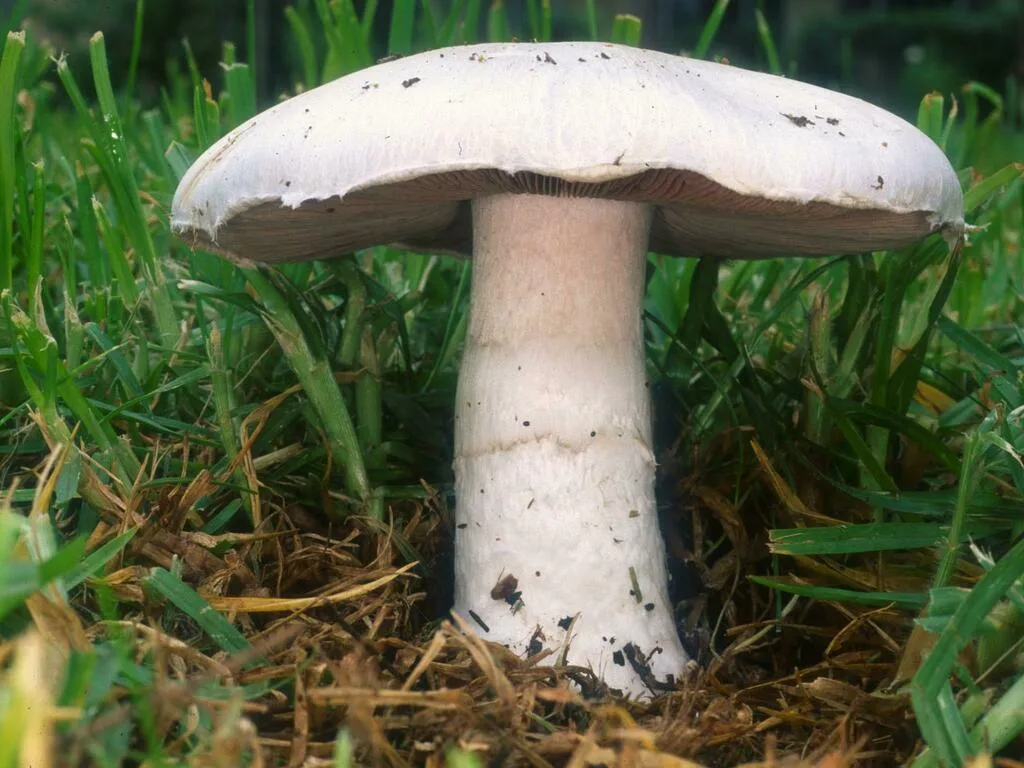
The meadow mushroom belongs to the same genus as the store button mushroom. The Missouri field guide gives pink gills that turn chocolate to blackish brown, a delicate ring that often disappears and a blackish brown spore print. It calls the species a choice edible "with extreme caution", because the destroying angel has white gills, a white print and a cup at the base. Texas has 64 records, and 44 fall in April and May.
Shaggy Mane
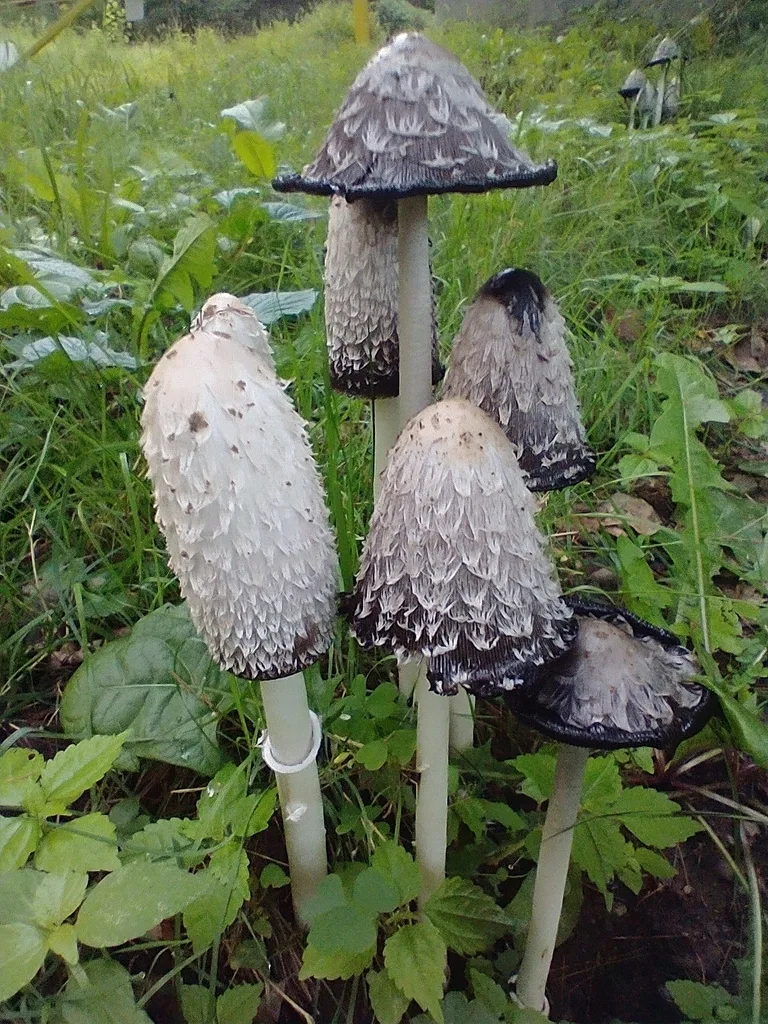
Shaggy mane is a tall white cylinder covered in upturned scales. The cap and gills turn black and liquefy, leaving a bare stalk. The Missouri guide warns that many white mushrooms that are not shaggy mane grow in the same places, so look for the ink or a black spore print. Texas has 701 records. The Hill Country and Central Texas hold 354, with a peak in April.
Purple-Spored Puffball
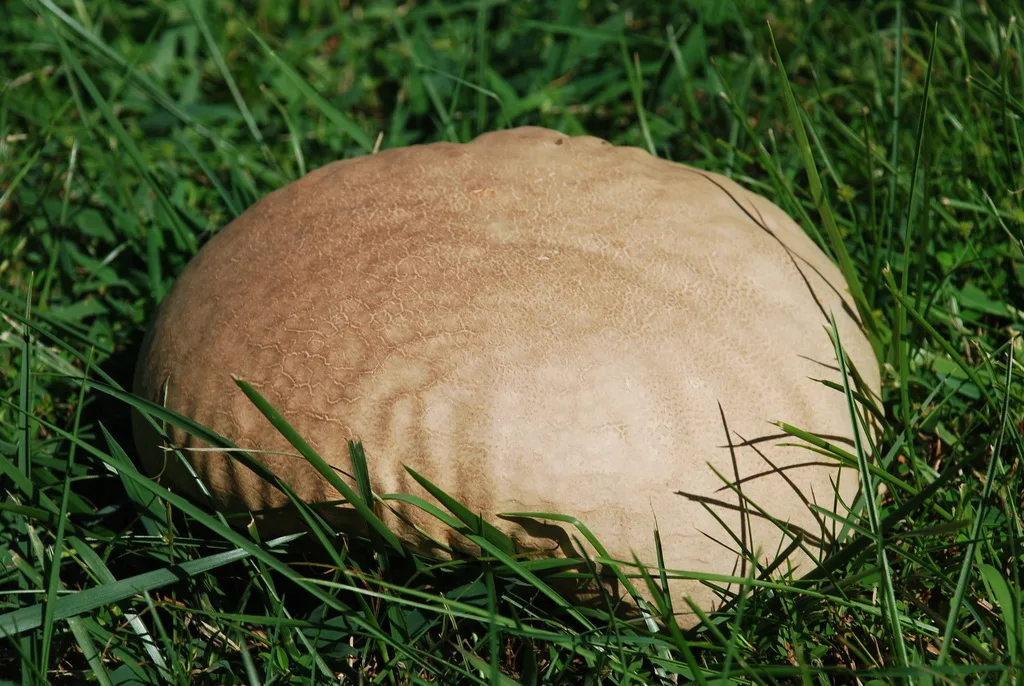
A white ball with no cap, stem or gills is a puffball. The purple-spored puffball has 293 Texas records, and 188 are in North Texas. Texas Parks & Wildlife magazine states that giant puffballs do not grow in Texas. Slice any white ball from top to bottom. The inside must be completely white and featureless. Our puffball identification chart shows the cut test.
Onion-Stalk Parasol
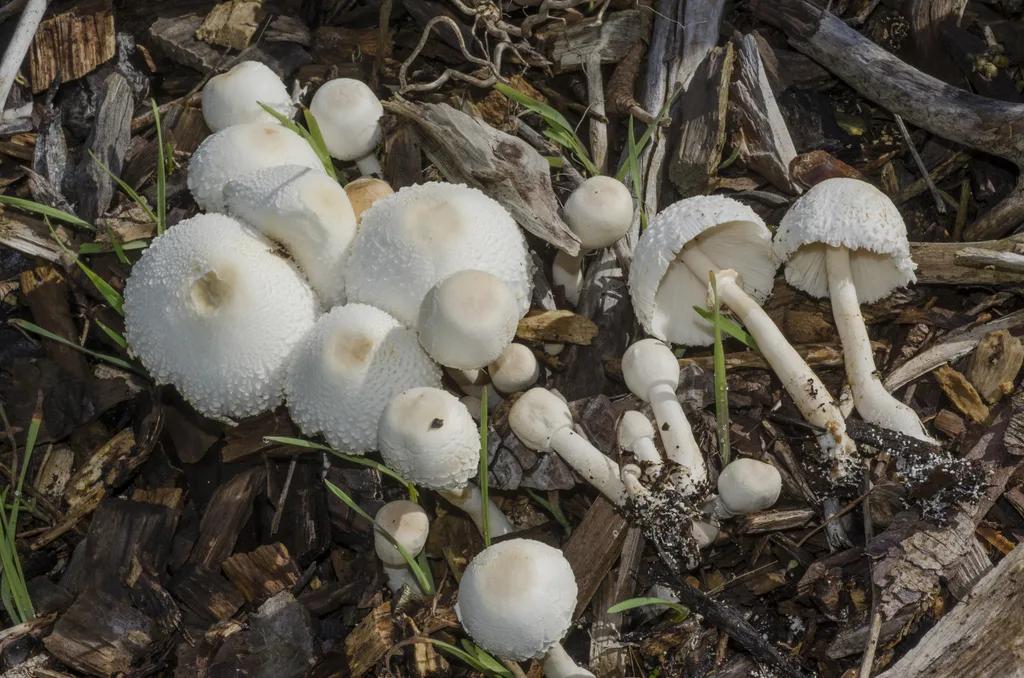
This white relative of the flowerpot parasol has 268 Texas records, and 114 fall in September. MykoWeb describes a white cap marked with fine lines that fruits outdoors on well-rotted wood chips or in grass. iNaturalist also holds 197 Texas records of a second white species, Leucocoprinus cretaceus. We found no edibility data for either, so treat both as unknown.
White Lawn Mushroom Look-Alikes: Side-by-Side Comparison
Four white lawn mushrooms overlap in size and shape, and the destroying angel is the deadly one. Compare the mature gills, the spore print and the base.
| Feature | Green-spored parasol | Thiers amanita | Destroying angel | Meadow mushroom |
|---|---|---|---|---|
| Cap | Cream or tan scales | White, sticky, shaggy | White | White to gray-brown, dry |
| Mature gills | Dingy green | Whitish yellow | White | Chocolate to blackish brown |
| Spore print | Green | White | White | Blackish brown |
| Base | Stalk widens toward the base | Slightly bulbous | Saclike cup, often buried | No cup |
| Texas peak | September | September and October | May and June | April and May |
| Risk | Poisonous | Not edible, untested | Deadly | Edible with extreme caution |
Are White Mushrooms in Texas Yards Poisonous?
Some are: the most common white lawn mushroom in Texas causes violent vomiting, and the destroying angel can kill. The North American Mycological Association (NAMA) calls the green-spored parasol the most common mushroom cause of human poisonings in North America. AgriLife's Brian Shaw says no known deaths have been linked to it.
Amatoxin mushrooms are different. NAMA says their symptoms are delayed for 6 to 24 hours, then return as liver and kidney failure after a false recovery. A fast stomach upset is the more common outcome, but a delayed one is the more dangerous sign. Our guide to white poisonous mushrooms covers the deadly species in detail.
Poisonous Mushrooms in Houston Yards
Harris County has 595 research-grade records of the green-spored parasol, 11 of the destroying angel and 10 of the Thiers amanita. A 2012 case report describes a 64-year-old Houston woman with amatoxin poisoning. She and her husband had gathered wild mushrooms from a sidewalk in the Houston area and cooked them. She needed intensive care and recovered.
Do Death Caps Grow in Texas Yards?
Sources conflict. A Texas A&M Pet Talk article says the death cap can be found across Texas. iNaturalist showed no research-grade Texas record of Amanita phalloides on the day of our count. The destroying angel is on record and carries the same toxin group, so the practical advice does not change.
What Are the Yellow Mushrooms in Texas Yards?
A bright yellow mushroom in a Texas flower bed, pot or mulch strip is most often the flowerpot parasol. It has 2,598 research-grade Texas records, almost as many as the green-spored parasol.
Flowerpot Parasol
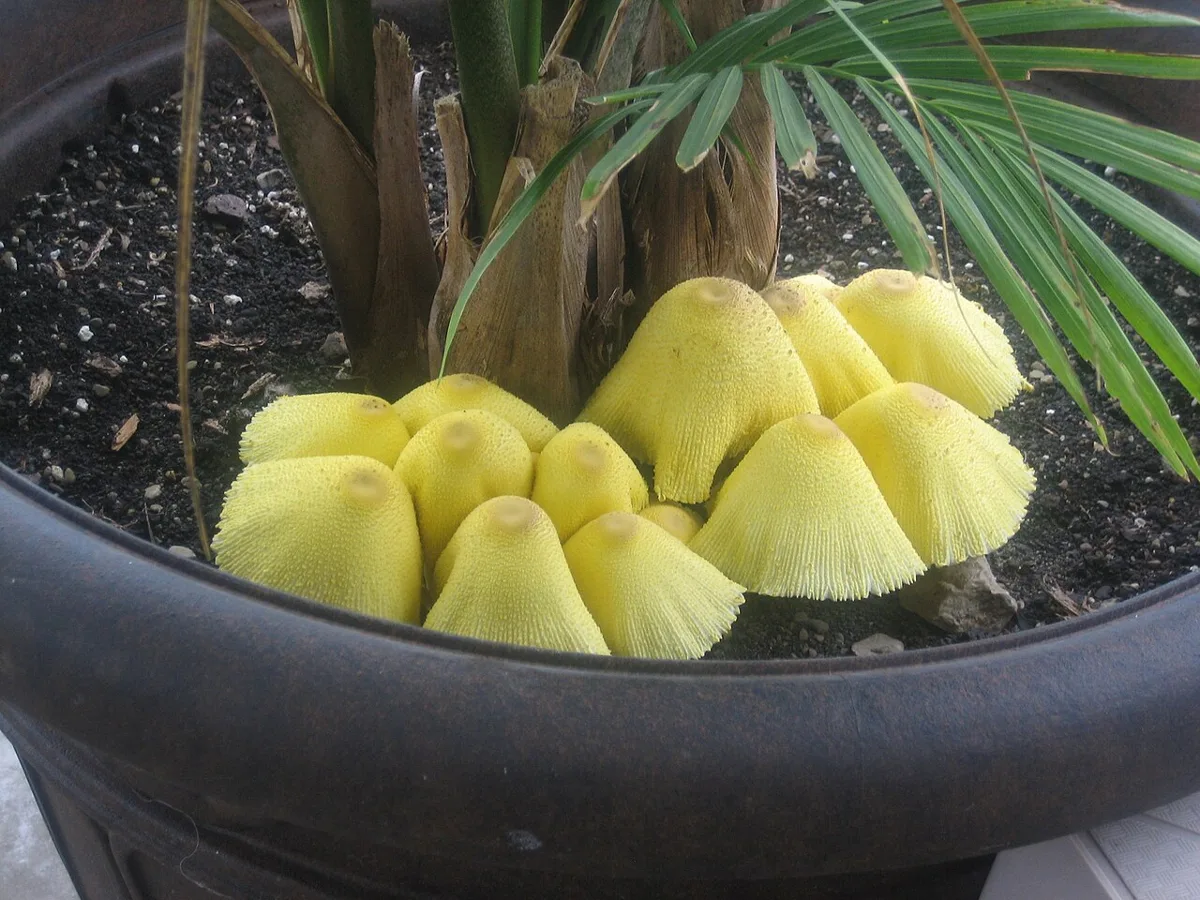
MykoWeb describes a bright yellow, bell-shaped cap 2 to 5 cm across with fine lines and a thin, collar-like ring. The color fades fast in sun. It grows in potted plants and sometimes outdoors in grass or well-decayed wood chips. MykoWeb rates it "possibly poisonous, to be avoided". Texas records run from April to October, and the Hill Country and Central Texas hold 1,035. Our guide to the yellow mushroom in potted plants explains what to do indoors.
What Should You Do About Dogs and Children?
Remove yard mushrooms where children or pets play, and call for help the moment one is eaten. Do not wait for symptoms, and do not try to judge the species yourself.
- A child or adult ate one: call the Texas Poison Center Network at 1-800-222-1222. The line answers at any hour. Call 911 for collapse, seizures or trouble breathing.
- A dog or cat ate one: the Texas A&M Pet Talk article tells owners to contact a veterinarian immediately. It says signs of death cap poisoning usually start 6 to 12 hours after eating and can seem to resolve before the liver fails.
- Save the mushroom: NAMA says to collect a sample from the same spot, put it in a paper bag or waxed paper, not plastic, and refrigerate it.
- Wash up: AgriLife advises washing your hands after removing mushrooms, especially before touching your eyes or face.
NAMA lists amatoxin Amanitas and earthballs among the mushrooms that can kill dogs. Our page on what to do if your dog ate a mushroom walks through the first hour.
Do White Mushrooms Harm a Texas Lawn?
No. AgriLife describes these mushrooms as saprotrophs that feed on dead leaves, grass clippings and other debris in the soil. The mushroom is the fruiting part of a fungus that lives underground. A fairy ring marks the outer edge of that colony.
Shaw says picking mushrooms will not stop new ones, and that fungicides would likely harm useful soil fungi too. His advice is to leave them unless children or pets take an interest. For the reasons they appear after rain, see why mushrooms grow in a yard. For removal steps, see how to get rid of mushrooms in grass.
Common Identification Mistakes
Calling Every White Ball a Puffball
Amanitas start as egg-shaped buttons that resemble small puffballs. A sliced puffball is white and featureless. A sliced Amanita button shows a cap and stem.
Checking Gill Color on a Young Mushroom
Green-spored parasol gills start white to cream and turn green only with age. Check the oldest mushroom in the group, or take a spore print.
Snapping the Stem at Ground Level
The cup at the base of a destroying angel is often buried. Dig up the whole mushroom with a trowel before you decide what it is.
Assuming a Lawn Amanita Needs a Tree
The Thiers amanita lives on dead plant material and was first collected from a lawn. An open lawn with no trees can still grow an Amanita.
Frequently Asked Questions
What are the white mushrooms in my yard in Texas?
The most recorded white lawn mushroom in Texas is the green-spored parasol, a large scaly mushroom whose gills turn green with age. Others include shaggy mane, puffballs, the meadow mushroom, the white dapperling and the Thiers amanita.
Are white mushrooms in Texas poisonous?
Some are. The green-spored parasol causes violent vomiting and diarrhea, and the destroying angel carries amatoxin, which can destroy the liver. No white yard mushroom should be eaten without confirmation by a qualified person.
What is the big white mushroom that grows in Texas lawns after rain?
It is most often the green-spored parasol. It can reach 12 inches across, often grows in rings, and appears from April to October, with a peak in September. A green spore print confirms it.
Are white lawn mushrooms poisonous to dogs?
They can be. NAMA lists amatoxin Amanitas and earthballs among the mushrooms that can kill dogs. Texas A&M veterinarians advise keeping pets away from all yard mushrooms and calling a veterinarian immediately if one is eaten.
What are the yellow mushrooms in my yard in Texas?
A small, bright yellow mushroom in mulch, grass or a pot is most often the flowerpot parasol. MykoWeb rates it possibly poisonous. It grows from potting soil, grass or well-decayed wood chips.
Are there poisonous mushrooms in Houston?
Yes. Harris County has hundreds of green-spored parasol records and a small number of destroying angel records. A 2012 medical report documents amatoxin poisoning from mushrooms gathered from a Houston-area sidewalk.
Should I remove white mushrooms from my lawn?
Texas A&M AgriLife says to leave them unless children or pets show interest. They do not harm grass, and picking them does not stop new ones. Wash your hands after handling them.
Can I eat white mushrooms from my yard?
Do not eat them on your own identification. The common green-spored parasol is poisonous, and deadly Amanitas grow in Texas. A Texas A&M professor says the safest place to get mushrooms is the grocery store.
Do giant puffballs grow in Texas?
Texas Parks and Wildlife magazine states that giant puffballs do not grow in Texas. Texas records show the purple-spored puffball and other species instead. Any white ball must be sliced to rule out an Amanita button.
Final Safety Reminder
A white mushroom on a Texas lawn is usually a nuisance and sometimes a real danger. Never eat one based on a chart, a photo or an app. Photograph the cap, the gills and the dug-up base, take a spore print, and get a first opinion from our free mushroom identifier. Then ask a local mycological society to confirm it in person. Keep children and pets away until the mushrooms are gone.
Sign in to leave a comment and join the discussion.
 Guide
Edible mushrooms in Oregon peak in fall, when Pacific golden chanterelles, matsutake, king boletes and hedgehogs fruit from September into winter, and the...
 Guide
Mushrooms growing in a bathroom, a wall, a carpet or a basement mean that something in the house has stayed wet for a long time. A fungus only fruits...
 Guide
The most common poisonous mushroom in Florida yards is the green-spored parasol ( Chlorophyllum molybdites ), a big white lawn mushroom that causes severe...